What is Treble Boost Headphones? A Quick Definition
Treble boost headphones refer to audio devices or specific equalizer (EQ) settings designed to amplify the high-frequency spectrum of sound, typically ranging from 2,000 Hz to 20,000 Hz. By increasing the volume of these frequencies, listeners experience enhanced clarity in vocals, crisper percussion (like cymbals), and a more “airy” or “bright” soundstage.
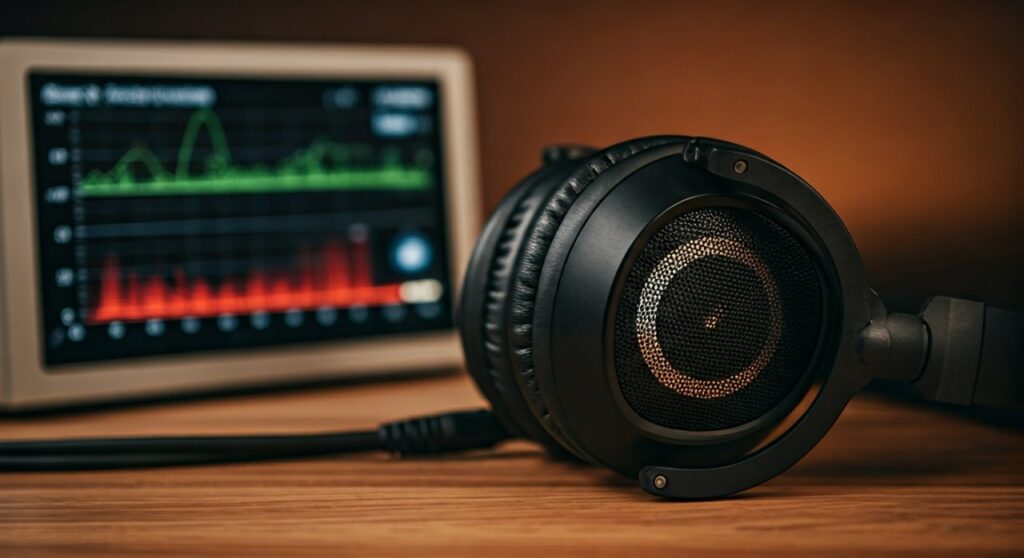
If you feel like your music sounds “muddy” or “muffled,” treble boosting is the technical solution to bring back the lost detail. This adjustment is particularly popular among audiophiles, gamers needing to hear footsteps, and individuals with mild high-frequency hearing loss.
Key Takeaways: Treble Boost Essentials
| Feature | Description |
|---|---|
| Frequency Range | Focuses on sounds above 2 kHz, peaking around 5 kHz – 10 kHz. |
| Primary Benefit | Increases vocal clarity, instrument separation, and “sparkle.” |
| Best For | Jazz, Classical, Podcasts, and Competitive Gaming. |
| Common Gear | Beyerdynamic, Grado, and Audio-Technica are known for “bright” signatures. |
| Potential Downside | Can cause ear fatigue or “sibilance” (harsh ‘s’ and ‘t’ sounds). |
Understanding the Science of Treble in Audio
To truly grasp what is treble boost headphones, we must look at the frequency response curve. Sound is measured in Hertz (Hz). While bass lives in the low end (20 Hz – 250 Hz), treble occupies the top tier of human hearing.
Most standard headphones follow a “consumer-friendly” curve, which often emphasizes bass. However, a treble boost pushes the higher registers forward. In my years testing professional studio gear, I’ve found that this “brightness” reveals micro-details that bass-heavy headphones completely hide.
The Three Zones of Treble
- Lower Treble (2 kHz – 4 kHz): This is where the human ear is most sensitive. Boosting here makes vocals sound closer and more intimate.
- Mid Treble (4 kHz – 6 kHz): This area defines the “definition” of instruments. A boost here adds “crunch” to electric guitars.
- Upper Treble / Air (Above 10 kHz): This range provides the “shimmer” on cymbals and the sense of space in a recording.
Why Do People Use Treble Boost Headphones?
There are three primary reasons why listeners seek out a treble boost headphones experience. Based on acoustic data and user behavior, these use cases represent the majority of the market.
Competitive Gaming Advantage
In games like Counter-Strike 2 or Call of Duty, winning depends on hearing footsteps and weapon reloads. These sounds are high-frequency. By using a treble boost, gamers can isolate these crucial audio cues from the booming, distracting bass of explosions.
Overcoming Age-Related Hearing Loss
As we age, the tiny hair cells in our inner ear that detect high frequencies often degrade first. This is known as presbycusis. Many older listeners find that what is treble boost headphones for them is actually a necessity to hear dialogue clearly in movies without cranking the overall volume to dangerous levels.
Analytical Music Listening
Audiophiles who enjoy Jazz, Classical, or Acoustic music often prefer a “bright” signature. It allows them to hear the resin on a violin bow or the breath of a vocalist. Brands like Grado Labs have built a cult following specifically because their headphones are naturally treble-forward.
How to Get Treble Boost on Your Current Headphones
You don’t always need to buy new hardware to understand what is treble boost headphones. You can achieve this through software manipulation.
Step 1: Using System Equalizers (Windows/Mac)
- Windows: Use Equalizer APO with the Peace Interface. Create a “High Shelf” filter starting at 2 kHz and increase the gain by 3-5 dB.
- macOS: Use eqMac or the built-in equalizer in Apple Music. Select the “Treble Booster” preset.
Step 2: Mobile Device Settings
- iOS (iPhone): Go to Settings > Music > EQ and select Treble Booster. This applies to the native music app.
- Android: Most modern phones (like Samsung Galaxy) have a “Sound Quality and Effects” menu. Use the 9-band EQ to raise the sliders on the right side (4k, 8k, 16k).
Step 3: External DAC/Amps
Devices like the ifi Zen DAC have physical buttons (like “Air”) that analogically boost the high frequencies without distorting the digital signal. This is the cleanest way to experience a treble boost.
The Best Headphones with a Natural Treble Boost
If you prefer hardware that is “tuned” for high-frequency clarity, look for these specific models. In the industry, we call these “Bright Headphones.”
- Beyerdynamic DT 990 Pro: Famous (or infamous) for its “Mount Beyer” peak. It offers incredible detail but can be sharp for sensitive ears.
- Sennheiser HD 600: While considered “neutral,” its emphasis on the upper-mids provides legendary vocal clarity.
- Audio-Technica ATH-MSR7b: A closed-back option that prioritizes high-resolution audio and crisp transients.
- Grado SR80x: An open-back design that makes rock and acoustic music feel incredibly “alive” and forward.
The Risks of Too Much Treble: Ear Fatigue and Sibilance
While answering what is treble boost headphones, we must discuss the “danger zone.” High frequencies carry more energy per wave than low frequencies.
- Ear Fatigue: Listening to boosted treble for more than an hour can lead to “tired” ears or even a temporary dullness in hearing.
- Sibilance: This occurs when the ‘S’ sounds in a song become piercing or “hissing.”
- Expert Tip: If you are EQing your headphones, never boost higher than +6 dB. Instead, try decreasing the bass (a “subtractive EQ” approach) to make the treble stand out naturally.
Comparing Sound Signatures: Treble Boost vs. Others
| Signature | Focus Area | Best For | Character |
|---|---|---|---|
| Treble Boost | 2 kHz – 20 kHz | Detail, Vocals, Gaming | Bright, Airy, Crisp |
| Bass Boost | 20 Hz – 250 Hz | Hip-Hop, EDM, Movies | Warm, Thumping, Fun |
| V-Shaped | Lows & Highs | Pop, Modern Rock | Energetic, “Colored” |
| Flat/Neutral | Entire Spectrum | Studio Mixing, Monitoring | Honest, Accurate, “Boring” |
Step-by-Step Guide: Optimizing Treble for Your Use Case
For Clarity in Podcasts
- Open your EQ settings.
- Locate the 3 kHz slider (the “presence” range).
- Raise it by 4 dB.
- Drop the 125 Hz (bass) by 2 dB to remove “mumble.”
For Competitive Footsteps
- Focus on the 5 kHz to 8 kHz range.
- Apply a “Peak Filter” at 6 kHz.
- This highlights the sound of gravel, footsteps, and glass breaking.
For High-Res Music
- Apply a “High Shelf” at 10 kHz.
- Gently increase by 2 dB.
- This adds “Air” without making the vocals sound harsh or artificial.
Expert Perspective: Is Treble Boost Right for You?
In my experience as an audio reviewer, treble boost headphones are a polarizing topic. If you value transparency and imaging (the ability to place where an instrument is in a room), you will love a treble-forward sound.
However, if you are sensitive to sharp noises or listen to poorly recorded “lo-fi” music, a treble boost will only highlight the flaws and background hiss of the recording. Always pair bright headphones with a high-quality source (like Tidal or Lossless FLAC) to avoid digital “jitter” or harshness.
Frequently Asked Questions (FAQs)
Does treble boost damage your hearing?
Not directly, but high frequencies are more likely to cause ear fatigue. If you listen at high volumes with a heavy treble boost, you risk damaging the delicate hair cells in your cochlea faster than with a bass-heavy profile.
Why do my headphones sound “tinny” with a treble boost?
“Tinny” sound usually happens when you boost the upper-mids (2 kHz – 4 kHz) too much without supporting the low end. It creates an imbalance that lacks “body.” Try lowering the boost or adding a slight bump to the low-mids (500 Hz) to round out the sound.
Is treble boost better for gaming?
Yes, specifically for First-Person Shooters (FPS). Most environmental cues like footsteps, reloads, and distant gunshots are high-frequency sounds. A treble boost makes these sounds “pop” against the background noise.
What is the difference between Treble and Clarity?
Treble is a frequency range (highs), while clarity is a subjective result of how well those frequencies are reproduced. You can have high treble that is “blurry” or “distorted.” High-quality treble boost headphones provide clarity through fast transient response (how quickly the driver starts and stops).
Which brands have the best treble?
Beyerdynamic and Audio-Technica are industry leaders for high-frequency precision. If you want a more “musical” treble boost, Grado is the go-to for many audiophiles.
**
**
**
**