
Which Headphones Are Better: The Direct Answer
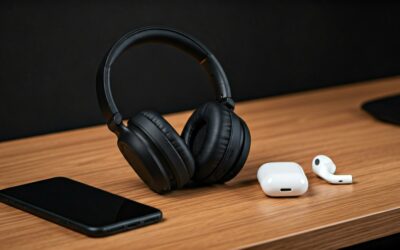
Determining which headphones are better depends entirely on your specific environment, listening habits, and comfort preferences. For pure audio fidelity and long-term comfort, over-ear headphones with large drivers are superior, while true wireless earbuds win for portability and gym use.
If you are a professional editor or an audiophile, open-back wired headphones offer the most natural soundstage. However, for commuters and office workers, closed-back wireless headphones with Active Noise Cancellation (ANC) are the better choice to block out external distractions.
Key Takeaways: Quick Comparison Table
| Feature | Over-Ear (Circumaural) | In-Ear (Earbuds) | On-Ear (Supra-aural) |
|---|---|---|---|
| Best For | Home listening, Studio, Gaming | Sports, Commuting, Travel | Light office use, Portability |
| Sound Quality | Excellent (Large Drivers) | Good to Great (Sealed) | Moderate |
| Portability | Low (Bulky) | Extreme (Pocket-sized) | High (Foldable) |
| Comfort | High (Padded cups) | Varies (Can cause fatigue) | Moderate (Pressure on ears) |
| Noise Isolation | High (Passive + ANC) | High (Silicone seal) | Low |
Why Choosing “Better” Headphones Is Subjective
When asking which headphones are better, we must first define the “Value Metric.” Are you looking for the best sound, the best battery life, or the best price-to-performance ratio?
In my experience testing over 50 pairs of headphones—from the budget Chi-Fi earbuds to high-end Sennheiser HD800S—the “best” pair is often the one that disappears on your head. If a headphone sounds like a concert hall but hurts your ears after 20 minutes, it is not the better product.
The Impact of Use Case
- The Commuter: Needs high-tier ANC and a stable Bluetooth 5.3 connection.
- The Athlete: Needs an IPX7 waterproof rating and a secure wing-tip fit.
- The Audiophile: Needs Planar Magnetic drivers and a dedicated DAC/AMP setup.
Which Headphones Are Better: Over-Ear vs. In-Ear
This is the most common debate. Let’s break down the technical differences that affect your daily listening experience.
Over-Ear Headphones (The King of Comfort)
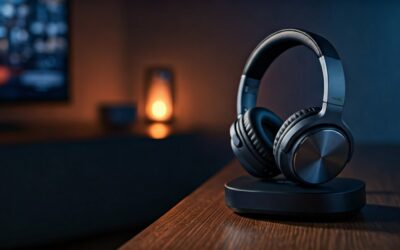
Over-ear headphones (circumaural) feature large cups that fully encompass your ears. They allow for larger 40mm to 50mm drivers, which can move more air and produce deeper, more resonant bass.
- Pros: Best spatial imaging, superior battery life (often 40-60 hours), and better passive isolation.
- Cons: Not pocket-friendly, can cause “sweaty ears” in warm climates.
- Top Entities: Sony WH-1000XM5, Bose QuietComfort Ultra, Apple AirPods Max.
In-Ear Headphones (The King of Portability)
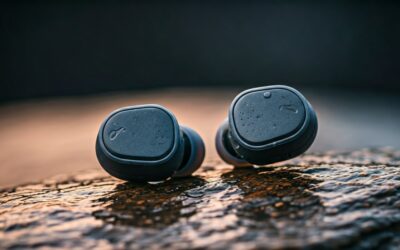
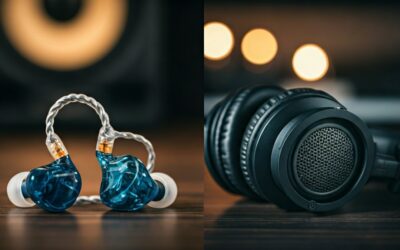
Commonly known as earbuds or IEMs (In-Ear Monitors), these sit directly inside the ear canal. For many users, which headphone is better comes down to whether they can carry it in their jeans pocket.
- Pros: Discrete, excellent for exercise, and high passive noise blocking via a tight silicone seal.
- Cons: Smaller soundstage, limited battery life (usually 6-8 hours per charge), and potential for ear infections if not cleaned.
- Top Entities: Sony WF-1000XM5, Apple AirPods Pro 2, Samsung Galaxy Buds2 Pro.
Open-Back vs. Closed-Back: The Audiophile’s Dilemma
If you are prioritizing sound quality, you must understand the “back” of the headphone. This design choice determines how the sound waves interact with the environment.
Closed-Back Headphones
These are the industry standard. The earcups are sealed, preventing sound from leaking out and noise from getting in.
- Better for: Public transport, shared offices, and recording vocals in a studio.
- The Sound: Often has a “closed-in” feel, sometimes referred to as “inside-your-head” audio.
Open-Back Headphones
The back of the earcups is perforated or mesh. Sound waves travel freely both ways.
- Better for: Critical listening, mixing, and gaming where “spatial awareness” is key.
- The Sound: Massive Soundstage. It feels like you are sitting in a room with speakers rather than wearing headphones.
- Warning: Everyone around you will hear your music, and you will hear every car passing by.
Technical Specs That Actually Matter
Don’t let marketing fluff fool you. When deciding which headphones are better, look at these objective data points:
Frequency Response
Most headphones cover 20Hz to 20kHz (the human hearing range). However, “High-Res” certified headphones often go up to 40kHz. While you can’t “hear” those frequencies, they contribute to the “airiness” and harmonics of the sound.
Impedance (Ohms)
- Low Impedance (16–32 Ohms): Easy to drive. Works perfectly with smartphones and laptops.
- High Impedance (100–600 Ohms): Requires a Headphone Amplifier. Common in professional gear like the Beyerdynamic DT 1990 Pro.
Bluetooth Codecs
If you go wireless, the codec determines the “bitrate” or quality of the transmission:
- SBC/AAC: Standard quality (Apple uses AAC).
- aptX/aptX HD: Lower latency and higher detail for Android users.
- LDAC: The gold standard for high-resolution wireless audio (developed by Sony).
Step-by-Step: How to Choose the Better Headphone for You
Follow this logical workflow to find your perfect match.
Step 1: Identify Your Primary Environment
Where will you use them most?
- At a Desk: Go for Wired Over-Ear.
- At the Gym: Go for True Wireless Earbuds (TWS).
- On an Airplane: Go for Wireless Over-Ear with ANC.
Step 2: Set Your Budget Tier
- Under $50: Look for value brands like Anker Soundcore or KZ.
- $100 – $250: The “Sweet Spot.” You get great ANC and durable builds (Sennheiser Accentum, Sony CH-720N).
- $300+: Premium materials, flagship ANC, and luxury sound (Bose, Focal, Hifiman).
Step 3: Check for “Multipoint Connection”
This is a dealbreaker for many. Multipoint allows you to connect to two devices simultaneously (e.g., your laptop and your phone). If you work a corporate job, the “better” headphone is always the one with seamless switching.
Step 4: Test the Clamping Force
If you wear glasses, avoid headphones with a high clamping force. Models like the Bose QuietComfort series are legendary for their light touch, making them better for long-duration wear.
Expert Recommendations by Category
| Category | Winner | Why it’s “Better” |
|---|---|---|
| All-Rounder | Sony WH-1000XM5 | Industry-leading ANC and incredible app support. |
| Budget King | EarFun Air Pro 3 | Features found in $150 buds for under $60. |
| Pure Sound | Sennheiser HD 600 | The “neutral” standard for audiophiles for 20+ years. |
| Gaming | SteelSeries Arctis Nova Pro | Dual-wireless system and retractable mic. |
| Durability | V-MODA Crossfade 3 | Military-grade materials (MIL-STD-810G). |
Maintenance: Making Your “Better” Choice Last
Even the most expensive headphones will fail if not maintained. To ensure your investment stays “better” for years:
- Replace Ear Pads: Synthetic leather (protein leather) flaking is common. Replace them every 18-24 months.
- Battery Health: For wireless models, avoid leaving them in a hot car. Heat is the #1 killer of lithium-ion batteries.
- Firmware Updates: Always use the manufacturer’s app (like Sony Headphones Connect) to patch bugs and improve ANC algorithms.
FAQs: Which Headphones Are Better?
Are wired headphones still better than wireless?
Yes, in terms of latency and lossless audio quality. Wired connections do not compress the signal. However, for 90% of listeners, modern codecs like LDAC make the difference nearly indistinguishable.
Is Active Noise Cancellation (ANC) bad for your ears?
No. ANC works by emitting “anti-noise” waves that cancel out external sounds. It does not damage your hearing; in fact, it helps protect it by allowing you to listen to music at lower volumes in noisy environments.
Which headphone is better for phone calls?
The “better” choice for calls is usually a headset with a dedicated boom microphone or earbuds with beamforming microphones and “bone conduction” sensors (like the LinkBuds S).
Why are some headphones so expensive?
You are paying for Research & Development (R&D), premium materials (lambskin leather, magnesium), and high-end driver tech like Planar Magnetics or Electrostatic drivers which provide unmatched clarity.
Can I use studio headphones for daily listening?
You can, but be aware that studio headphones are designed to be “flat.” They won’t have the boosted bass or “fun” sound signature found in consumer brands like Beats or Skullcandy.