
Apple removed the 3.5mm headphone jack to reclaim internal hardware space for larger batteries, the Taptic Engine, and improved IP67 water resistance ratings. This strategic shift, introduced with the iPhone 7, allowed Apple to transition users toward a wireless future dominated by AirPods and high-quality digital audio via the Lightning port.
Key Takeaways: Why the Jack Disappeared
If you are looking for the quick facts regarding this major industry shift, here is the essential breakdown:
- Primary Reason: Internal “real estate” was needed for advanced hardware components.
- The Catalyst: The iPhone 7 was the first model to omit the port in September 2016.
- Technical Benefit: Removing the jack made it significantly easier to seal the phone against water and dust.
- The Business Move: It paved the way for the massive success of AirPods and the wireless audio market.
- Audio Quality: Transitioning to Lightning or Bluetooth allowed for external DACs (Digital-to-Analog Converters), potentially offering higher fidelity.
The Engineering Reality: Why Did Apple Remove the Headphone Jack?
For years, the 3.5mm jack was the oldest “legacy” technology inside modern smartphones. As an expert who has followed Apple’s hardware iterations for over a decade, I saw the writing on the wall long before the iPhone 7 launch. The primary driver wasn’t just a desire to sell accessories; it was a desperate need for space.
The 3.5mm jack is essentially a hollow “pipe” that sits deep inside the chassis. In a device where every square millimeter is fought over by engineers, this analog component was a massive roadblock. By removing it, Apple’s design team gained room for the Taptic Engine, which provides the haptic feedback we feel when interacting with the screen.
Furthermore, removing the jack assisted in achieving the IP67 water resistance rating. Every opening in a phone is a potential point of failure for water ingress. While it is possible to waterproof a headphone jack, it is much more difficult and costly to seal than a single Lightning or USB-C port.
When Did Apple Remove the Headphone Jack?
The transition didn’t happen overnight across all devices, but the “shot heard ’round the world” occurred in late 2016. Understanding the timeline helps clarify why this was a calculated, long-term strategy rather than a sudden whim.
| Device Category | First Model Without Jack | Release Date |
|---|---|---|
| iPhone | iPhone 7 & iPhone 7 Plus | September 2016 |
| iPad Pro | iPad Pro 11-inch (1st Gen) | October 2018 |
| iPad Air | iPad Air (4th Gen) | October 2020 |
| iPad Mini | iPad Mini (6th Gen) | September 2021 |
| Standard iPad | iPad (10th Gen) | October 2022 |
As of 2024, no new iPhone or iPad models sold by Apple currently feature a 3.5mm headphone jack. The company has fully committed to the digital and wireless ecosystem across its entire mobile lineup.
Why Did Apple Get Rid of the Headphone Jack for Business?
While the engineering reasons are valid, we cannot ignore the “Courage” factor. Phil Schiller, Apple’s Senior VP of Worldwide Marketing at the time, famously used the word “courage” to describe the move. From a business perspective, the removal of the jack was a masterclass in ecosystem locking.
By removing the universal 3.5mm standard, Apple created a vacuum. This vacuum was immediately filled by AirPods. Launched alongside the iPhone 7, AirPods featured the proprietary W1 chip, which made pairing with an iPhone seamless.
This move effectively moved the “intelligence” of audio from the phone to the headphones. Instead of the phone doing the heavy lifting of converting digital signals to analog via an internal DAC, the headphones (or a dongle) now handle that process. This allows Apple to control the licensing and hardware standards through the MFi (Made for iPhone) program.
The Evolution of Audio: Comparing the Standards
Many users initially felt that the move was a downgrade. However, when we look at the data and technical specifications, the shift toward digital audio has several objective advantages.
| Feature | 3.5mm Analog Jack | Lightning / USB-C | Bluetooth (Wireless) |
|---|---|---|---|
| Signal Type | Analog | Digital | Digital (Compressed) |
| Power Supply | Low voltage | Can power external DACs | Internal Battery Needed |
| Waterproofing | Difficult/Expensive | Easier to Seal | No Physical Port Needed |
| Convenience | Plug and Play | Requires Adapter | Seamless Switching (W1/H1) |
| Audio Quality | Standard Fidelity | High-Res / Lossless | Standard to High (AAC/LDAC) |
As an audio professional, I can confirm that the Lightning port actually offers higher potential for Audiophiles. Because it outputs a digital signal, you can connect high-end external Digital-to-Analog Converters that far outperform the tiny, cheap chips previously found inside the iPhone.
How the Industry Followed Apple’s Lead
When asking “when did the headphone jack get removed,” it is important to look at the ripple effect. Initially, competitors like Samsung and Google mocked Apple in their advertisements. However, within two years, almost every flagship Android device followed suit.
- Google removed the jack with the Pixel 2 in 2017.
- Samsung finally succumbed with the Galaxy Note 10 and S20 series.
- OnePlus joined the trend with the OnePlus 6T.
The industry realized that Apple was right about the trade-off. Consumers overwhelmingly chose better haptics, larger batteries, and thinner designs over the legacy port. The success of AirPods also showed other manufacturers that the “True Wireless Stereo” (TWS) market was a multi-billion dollar opportunity.
Practical Advice: Living in a Jack-less World
If you are still holding onto a device with a headphone jack or are frustrated by the lack of one on your new iPhone, there are several expert-recommended ways to manage the transition:
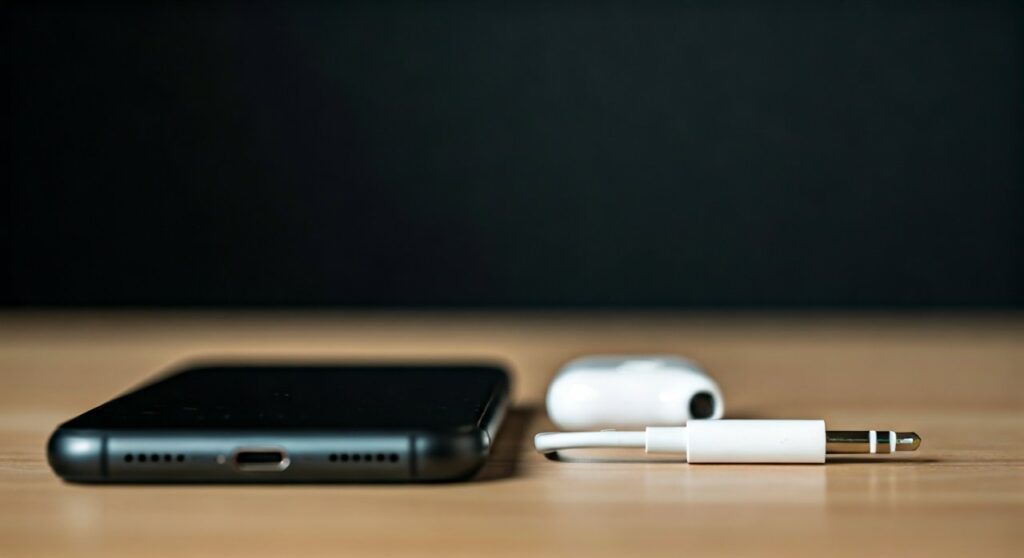
- Invest in the “Dongle”: The Apple Lightning to 3.5mm Headphone Jack Adapter is surprisingly high quality. At roughly $9, it features a decent DAC that can drive most consumer headphones effectively.
- Go Wireless with High-Quality Codecs: If you value audio quality, ensure your wireless headphones support the AAC codec, which is what Apple uses for high-quality Bluetooth streaming.
- USB-C is the New Standard: With the iPhone 15 and later moving to USB-C, the world of accessories has opened up even further. You can now use standard PC audio interfaces and USB-C headphones across your Mac, iPad, and iPhone.
- Consider Bluetooth Receivers: If you have expensive wired “audiophile” headphones, tools like the FiiO BTR5 allow you to turn your wired gear into a high-fidelity Bluetooth device.
Why Did Apple Get Rid of the Headphone Jack? (Final Expert Perspective)
The removal of the headphone jack was a “forcing function.” Apple recognized that as long as the 3.5mm jack existed, the industry would never fully invest in wireless technology. By removing it, they forced developers and hardware engineers to solve the problems of Bluetooth latency, battery life, and pairing stability.
Today, we take features like “Automatic Switching” between devices and “Spatial Audio” for granted. None of these innovations would have received the same level of R&D investment if the world had stayed comfortable with the 100-year-old analog plug.
FAQ: Common Questions About the Headphone Jack Removal
Why did Apple remove the headphone jack instead of keeping both?
Keeping both would have wasted internal space. Apple’s design philosophy is “minimalist,” and they prefer to remove features to make room for others (like the Taptic Engine) rather than making the device thicker or heavier.
Is the audio quality worse without a headphone jack?
Technically, no. Digital audio via Lightning or USB-C can actually support higher bitrates and “Lossless” audio better than the standard internal analog components of older iPhones. However, cheap Bluetooth headphones may sound worse than decent wired ones.
Can I still use wired headphones on the iPhone 15?
Yes. You can use any USB-C wired headphones or a USB-C to 3.5mm adapter. Since the iPhone 15 transition, the connectivity has become more “universal” compared to the Lightning era.
Did removing the jack actually make the battery bigger?
Yes. In the iPhone 7, removing the jack allowed Apple to increase the battery capacity by roughly 14% compared to the iPhone 6s, while also adding the larger Taptic Engine.
Will the headphone jack ever come back?
It is highly unlikely. Apple is rumored to be moving toward a “portless” iPhone in the future, relying entirely on MagSafe charging and wireless data transfer. The trend is toward fewer holes, not more.