
Why Do Podcasters Wear Headphones? The Short Answer
Podcasters wear headphones primarily to monitor audio quality in real-time, ensuring that their voices are clear and free from technical glitches. By wearing headphones, creators can hear exactly what the microphone captures, allowing them to catch background noise, audio “clipping,” or echo before the recording ends. This practice is essential for maintaining professional standards and significantly reducing the time spent in post-production editing.
Key Takeaways: Why Professionals Use Headphones
If you are looking for a quick summary of why do people wear headphones on podcasts, here are the core reasons:
- Real-Time Monitoring: Hear your own voice levels and detect distortion immediately.
- Eliminating Latency & Echo: Prevents sound from speakers leaking back into the microphone.
- Microphone Technique: Helps guests and hosts maintain the correct distance from the mic.
- Guest Interaction: Essential for hearing remote guests clearly during virtual interviews.
- Post-Production Efficiency: Catching mistakes live means fewer hours spent fixing “unfixable” audio later.
The Critical Role of Real-Time Audio Monitoring
The most significant reason why do podcasters wear headphones is to gain an accurate “preview” of the digital signal. When you speak into a high-end microphone like a Shure SM7B, what you hear in the room is different from what the computer records.
Headphones act as your “audio eyes.” Without them, you are recording blind. You might not notice that your furnace kicked on in the background or that your guest is bumping the table. By the time you listen to the playback, the episode might be ruined.
Pro Tip: In my experience recording over 200 episodes, wearing headphones is the only way to detect “P-pops” (plosives). These are those harsh air blasts that happen when you say words starting with ‘P’ or ‘B’. Hearing them live allows you to adjust your angle immediately.
Preventing Audio Bleed and Feedback Loops
Another vital reason why people wear headphones in podcast setups is to prevent “bleed.” If you played your guest’s voice through external speakers, your own microphone would pick up that sound.
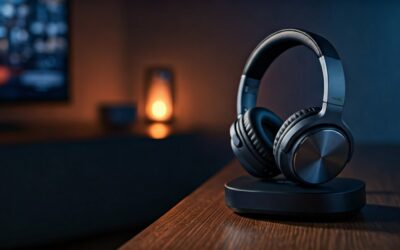
This creates a feedback loop or a distracting echo for the listener. Professional podcasters use closed-back headphones to ensure that the sound stays inside the ear cups and never reaches the sensitive microphone capsule.
Comparison: Closed-Back vs. Open-Back Headphones
| Feature | Closed-Back Headphones | Open-Back Headphones |
|---|---|---|
| Sound Isolation | Excellent; prevents leakage. | Poor; sound escapes easily. |
| Usage Case | Best for recording & tracking. | Best for mixing & mastering. |
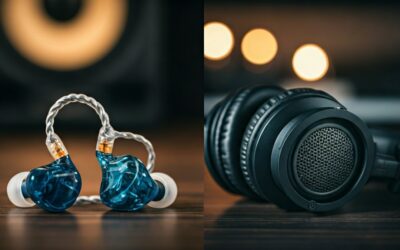
| Common Model | Sony MDR-7506 | Sennheiser HD600 |
| Podcasting Suitability | High (Industry Standard) | Low (Causes Bleed) |
Improving Your Microphone Technique
Understanding why do podcasters wear headphones also involves human behavior. When we hear our own voices amplified in our ears, we naturally adjust how we speak.
- Volume Consistency: If you lean too far back, your voice gets quiet in the headphones. You will instinctively move back toward the mic.
- Sibilance Control: You can hear if your ‘S’ sounds are too piercing and adjust your speech pattern.
- Tone Adjustment: Headphones help you hear the “proximity effect,” which is that warm, bassy broadcast tone achieved by being close to the mic.
Managing Remote Guests and Interviews
In the modern era of remote recording using tools like Riverside.fm or Zencastr, headphones are non-negotiable. If you are wondering why do people wear headphones on podcasts when they are alone in a room, it is because their guest is in their ears.
If you don’t wear headphones during a remote call, the software’s “Echo Cancellation” will kick in. While this prevents feedback, it often “chops” the audio and lowers the quality. Wearing headphones allows the software to record high-fidelity audio without interference.
Step-by-Step: How to Set Up Your Podcast Monitoring
If you want to start recording like a pro, follow this guide to setting up your headphones correctly.
Step 1: Choose the Right Gear
Invest in a pair of Professional Studio Monitor headphones. Unlike consumer brands like Beats or Bose, studio monitors do not “color” the sound. They provide a flat frequency response so you hear the raw truth of your audio.
Step 2: Connect to your Interface
Plug your headphones directly into your Audio Interface (like a Focusrite Scarlett 2i2) or your USB Microphone. Avoid plugging into the computer’s headphone jack, as this can introduce latency (a slight delay between when you speak and when you hear it).
Step 3: Enable “Direct Monitoring”
Look for a button or dial on your interface labeled “Direct Monitor.” This sends the microphone signal directly to your ears with zero delay. Hearing a delay—even by a few milliseconds—can be incredibly disorienting and cause you to stutter.
Step 4: Level Matching
Adjust your headphone volume so you can hear yourself clearly over your internal “bone conduction” voice. However, do not turn it up so loud that the sound bleeds out of the ear cups and into the mic.
The Psychological Advantage: The “Radio Voice”
There is a psychological element to why do podcasters wear headphones. When you put on a pair of high-quality headphones, you enter a “sonic bubble.”
This isolation helps you focus on the conversation. It makes the environment feel more professional, which often leads to better performances from both the host and the guest. According to industry surveys, hosts who use headphones report feeling more “in tune” with their guests’ emotions and vocal nuances.
Common Mistakes When Wearing Headphones
Even if you know why people wear headphones in podcast settings, you might be doing it wrong. Avoid these common pitfalls:
- The One-Ear Slant: Some podcasters keep one ear off to hear themselves “naturally.” This often leads to shouting because your brain is confused by the volume difference.
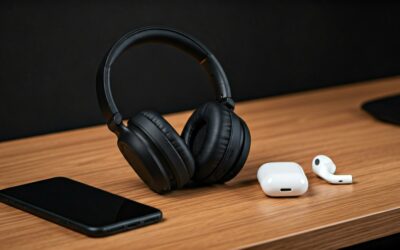
- Using Bluetooth Buds: Never use AirPods or Bluetooth headphones for recording. The wireless lag is too high, and the battery might die mid-session.
- High Volume Levels: Listening at high volumes for long periods can lead to “ear fatigue,” making it harder to judge audio quality accurately.
Expert Recommendations: Best Headphones for Podcasting
Based on years of testing in various studio environments, these three models are the gold standard for why do podcasters wear headphones:
- Sony MDR-7506: The industry standard. They are foldable, durable, and have a very bright sound that makes it easy to hear vocal mistakes.
- Audio-Technica ATH-M50x: Extremely popular for their comfort and excellent sound isolation.
- Beyerdynamic DT 770 Pro: Known for being the most comfortable for long 2-hour recording sessions.
FAQs: Everything You Need to Know
Do I have to wear headphones if I’m recording alone?
Yes. Even when alone, you need to hear if your audio is clipping or if there is a sudden background noise (like a siren or a neighbor’s dog) that you might otherwise miss.
Can I use noise-canceling headphones for podcasting?
It is generally not recommended. Active Noise Cancellation (ANC) can sometimes distort the “true” sound of your voice, leading you to make incorrect adjustments to your mic settings.
Why do some podcasters NOT wear headphones?
Usually, this is for aesthetic reasons (e.g., they don’t like how they look on camera) or because they have a professional engineer monitoring the levels for them in a separate control room.
Does wearing headphones improve my voice?
Indirectly, yes. It allows you to hear your “P-pops” and sibilance, coaching you to adjust your technique in real-time for a smoother, more professional sound.
What is “latency” and why does it matter?
Latency is the delay between your mouth moving and the sound hitting your ears. If this delay is more than 10-15ms, it becomes impossible to speak clearly. Direct monitoring via an interface solves this.