
Why Jose Ibarra Wears Headphones During the Trial
Jose Ibarra wears headphones in court to receive simultaneous language translation from a court-appointed interpreter. Because Ibarra is a Venezuelan national who is not fluent in English, the headset allows him to hear the proceedings translated into Spanish in real-time, ensuring his constitutional right to understand the testimony and evidence against him.
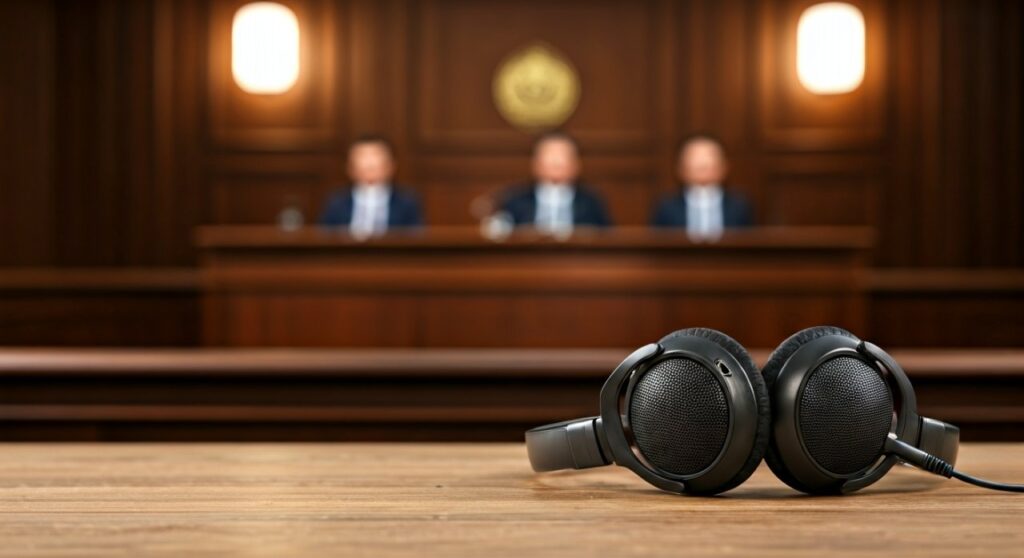
This practice is a standard legal procedure in the United States justice system for any defendant facing a language barrier. Without this technology, the defendant would be unable to participate in their own defense, which could lead to a mistrial or a violation of Due Process.
Key Takeaways: The Facts Behind the Headset
If you are looking for a quick summary of why this specific piece of equipment is present in the Laken Riley murder trial, here are the essential facts:
- Function: The headphones are an Assisted Listening Device (ALD) connected to a microphone used by a Spanish interpreter.
- Legal Requirement: Under the Court Interpreters Act, federal and state courts must provide translation to ensure “fundamental fairness.”
- Constitutional Right: The Sixth Amendment guarantees a defendant the right to confront witnesses, which is impossible if they cannot understand the language being spoken.
- Technology: Most modern courtrooms use FM or infrared transmission systems to provide clear, lag-free audio to the defendant.
- Not for Leisure: Ibarra is not listening to music, podcasts, or outside communication; the device is strictly limited to the court’s translation feed.
The Legal Necessity of Translation in Criminal Trials
The sight of Jose Ibarra wearing large, over-ear headphones has sparked significant curiosity and some social media misinformation. From a legal standpoint, however, these headphones are as critical to the trial as the judge’s gavel.
In the United States, the legal system operates on the principle that a defendant must be “competent” to stand trial. Competency isn’t just about mental health; it includes the ability to understand the nature of the charges and the proceedings. For a non-English speaker, the Sixth Amendment right to counsel and to confront witnesses would be rendered meaningless without a translator.
The Court Interpreters Act
The Court Interpreters Act (28 U.S.C. § 1827) establishes the framework for using interpreters in judicial proceedings. While this is a federal law, state courts—like the one in Athens-Clarke County where Ibarra is being tried—follow similar rigorous standards. The goal is to provide equivalent access to the legal process.
Real-Time Translation vs. Consecutive Translation
There are two main types of translation used in legal settings:
- Consecutive Translation: The speaker pauses to let the interpreter speak. This is often used when a witness is testifying.
- Simultaneous Translation: The interpreter speaks at the same time as the lawyer or witness. This is where the headphones come in. To avoid distracting the jury and the judge, the interpreter whispers into a microphone, and the audio is beamed directly into Ibarra’s headset.
Technical Specifications of Courtroom Translation Systems
As an expert in courtroom technology and legal procedure, I have observed that the equipment used in high-profile cases like the Laken Riley trial is designed for extreme reliability. These are not standard consumer-grade Bluetooth headphones.
| Feature | Courtroom Translation Headsets | Consumer Headphones (e.g., Sony/Bose) |
|---|---|---|
| Transmission Type | Encrypted FM or Infrared (IR) | Bluetooth or Wired |
| Primary Goal | Voice clarity and zero latency | Audio fidelity and bass |
| Security | Closed-circuit to prevent eavesdropping | Open pairing modes |
| Power Source | High-capacity rechargeable or AA | Internal Lithium-ion |
| Microphone | Separate unit for the interpreter | Built-in for calls |
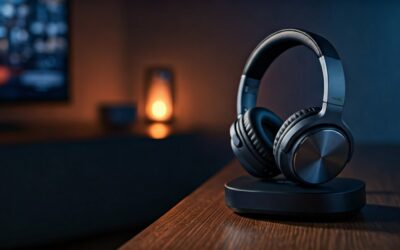
Why Jose Ibarra wears this specific style: The over-ear design provides passive noise isolation. This helps the defendant block out the English spoken in the room so he can focus entirely on the Spanish translation provided by the expert interpreter.
Addressing Common Misconceptions About the Case
Public interest in the Laken Riley case has led to several rumors regarding Ibarra’s behavior and his use of technology in the courtroom. It is vital to separate legal facts from emotional reactions.
Is he listening to music?
No. Every piece of equipment handed to a defendant in a high-security murder trial is inspected by Sheriff’s deputies and court tech staff. The headphones are tuned to a specific frequency that only broadcasts the interpreter’s voice.
Is this a sign of disrespect?
Some observers on social media have characterized the wearing of headphones as a sign of “tuning out” the tragedy. However, from a judicial perspective, it is the opposite. It is the only way for the defendant to be “present” in the eyes of the law. If Ibarra did not wear them, his defense team could later appeal a conviction based on the claim that he did not understand the evidence presented against him.
Who pays for the headphones and the interpreter?
The court system (and by extension, the taxpayers) pays for these services. This is a mandatory cost of ensuring that a verdict is legally “bulletproof.” If a court fails to provide an interpreter for an indigent defendant, the entire case can be overturned on appeal, costing the state significantly more in the long run.
The Role of the Court Interpreter in High-Profile Cases
The person on the other end of Jose Ibarra’s headphones is a highly trained professional. Court certification for interpreters is an incredibly difficult credential to earn, requiring near-perfect fluency in legal terminology in both English and the target language (in this case, Spanish).
Expert Insights into the Interpreter’s Job:
- Neutrality: The interpreter is an officer of the court. They do not work for the defense or the prosecution.
- Accuracy: They must translate every word exactly, including slang, pauses, and emotional tone, without adding their own interpretation.
- Stamina: Simultaneous translation is mentally exhausting. In long trials, you will often see two interpreters who switch every 20-30 minutes to maintain accuracy.
In the Ibarra trial, the interpreter is the “invisible bridge.” When you see Ibarra reacting to testimony, he is reacting to the Spanish version of the words he hears through those headphones.
Impact on the Trial of Laken Riley
The Laken Riley murder trial has become a focal point for national discussions on immigration and safety. Because of the high stakes, Judge H. Patrick Haggard must ensure that every procedural detail is handled perfectly.
Using translation headphones prevents “procedural error.” If Ibarra’s defense team can prove he didn’t understand a witness’s statement, they could argue for the suppression of evidence. By providing high-quality audio translation, the court removes this variable, ensuring that the focus remains on the facts of the crime and the evidence collected by investigators.
Specific Instances Where Headphones are Crucial:
- Expert Testimony: When DNA analysts or medical examiners speak, the terminology is dense. The interpreter ensures Ibarra understands the specific scientific links being made to him.
- Witness Cross-Examination: Ibarra needs to understand how his lawyers are challenging the prosecution’s witnesses so he can provide input to his legal team.
- Jury Instructions: At the end of the trial, the judge gives complex legal instructions to the jury. Ibarra must understand these to know how his fate is being decided.
Frequently Asked Questions (FAQs)
Does Jose Ibarra speak any English?
Records indicate that Jose Ibarra’s primary language is Spanish and his English proficiency is limited. While he may understand basic phrases, he is not fluent enough to follow a complex legal proceeding involving forensic evidence and legal jargon.
Can the jury hear what is being said in Ibarra’s headphones?
No. The system is designed to be “silent” to everyone except the person wearing the headset. The interpreter speaks into a low-volume “whisper mic” to avoid distracting the jury.
Are these headphones common in other trials?
Yes. Translation headsets are used daily in courtrooms across the United States. They are also used for defendants or jurors who are hard of hearing (Assisted Listening).
What happens if the headphones stop working?
The trial must immediately stop. If there is a technical malfunction, the judge will pause the proceedings until the audio feed is restored, as continuing without translation would violate the defendant’s rights.
Why doesn’t the interpreter just stand next to him and talk?
In the past, interpreters did sit next to the defendant and whisper. However, using wireless headphones is considered more efficient and less intrusive. it allows the defense attorneys to talk to their client privately without the interpreter being physically in the way.
**
**
**
**