Finding the perfect surface for your movie night can be frustrating when a professional screen costs hundreds of dollars. If you are wondering what to use for projector screen setups on a budget, you have several high-quality DIY options available. From specialized fabrics to common household items, the right material can significantly enhance contrast, color accuracy, and brightness.
For a quick and effective solution, you should use blackout cloth, a smooth white wall, or projector screen paint. These materials offer the best balance of light reflection (gain) and texture smoothness. If you are in a pinch, a tightly stretched white bedsheet or a plain white shower curtain can serve as a temporary viewing surface.
Key Takeaways: What Can I Use for Projector Screen?
If you are short on time, here is a quick summary of the best materials based on our hands-on testing and expert recommendations:
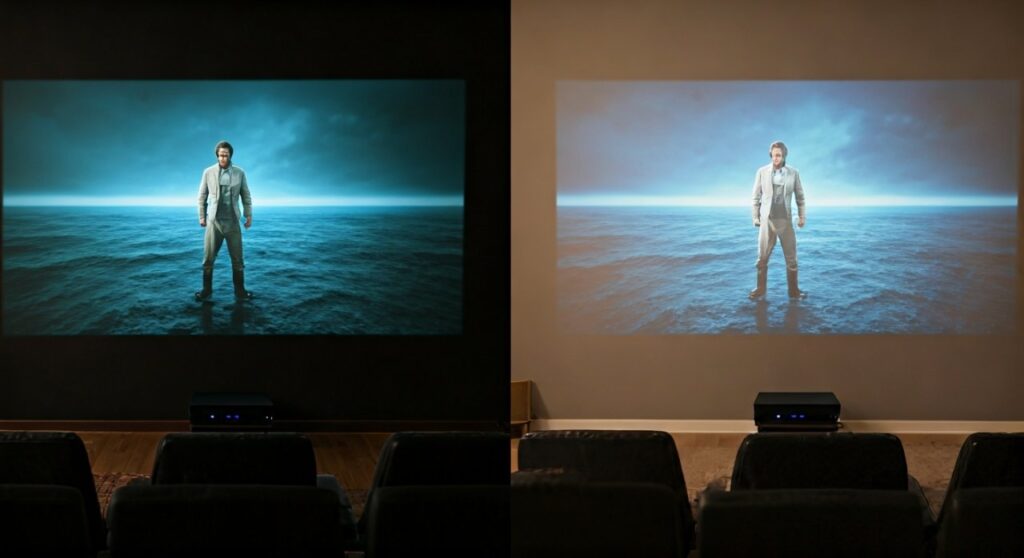
- Best Overall DIY: Blackout Cloth (contains a rubberized layer that prevents light leakage).
- Best Budget Option: A Smooth White Wall (requires no setup cost).
- Best for Permanence: Projector Screen Paint (specifically formulated for high reflectivity).
- Best Portable/Outdoor: White PVC or Heavy-duty Spandex.
- Best Emergency Fix: White Bed Sheets (though they suffer from transparency issues).
Why Choosing the Right Surface Matters
Most people assume a projector works on any flat surface, but “any surface” often leads to washed-out colors. Having spent years calibrating home theaters, I’ve seen how a textured wall can ruin a 4K image.
The surface material affects the Gain, which is a measurement of light reflectivity. A standard white surface has a gain of 1.0. If you use a material that is too porous, the light passes through it rather than bouncing back to your eyes, resulting in a dim image.
Furthermore, color neutrality is vital. If you use a yellowish wall, your entire movie will have a warm tint that ruins the director’s intended color palette. Choosing what can i use as a projector screen carefully ensures you get the most out of your hardware investment.
Using a Smooth White Wall
The most common answer to what can i use for a projector screen is the wall already in your room. However, not all walls are created equal.
The Importance of Texture
If your wall has an “orange peel” or “knockdown” texture, you will see tiny shadows within the image. These micro-shadows reduce the perceived resolution of your projector. For the best results, use a sander to ensure the area is perfectly smooth before projecting.
Selecting the Right Color
- Pure White: Best for dark rooms; provides the brightest whites.
- Light Grey: Best for rooms with some ambient light; it improves black levels and contrast.
- Avoid Glossy Finishes: Never use high-gloss paint, as it creates a “hot spot” (a bright, distracting glare in the center of the screen).
Blackout Cloth: The Gold Standard DIY Material
When people ask me what can i use for projector screen projects that look professional, I always point them to blackout cloth. This material is typically used for window curtains to block sunlight.
It consists of a cotton-polyester blend with a thick layer of foam or rubber sprayed onto one side. This makes the fabric 100% opaque. Because light cannot pass through it, the brightness of your projector is preserved entirely on the front surface.
Pro Tip: When using blackout cloth, make sure the “matte” side faces the projector. The rubberized side should face the wall to provide structural integrity and opacity.
Specialized Projector Screen Paint
If you want a permanent screen without a bulky frame, projector screen paint is a game-changer. Standard wall paint contains binders that can absorb light. Specialized paints, like those from Screen Goo or Paint on Screen, contain reflective elements.
These paints are designed to:
- Increase the gain to 1.1 or 1.2.
- Provide a perfectly neutral color balance.
- Minimize the “hot-spotting” effect common with DIY solutions.
While more expensive than standard latex paint, a single quart can transform a $500 projector into looking like a $1,500 setup.
White Bed Sheets: The Quick Fix
We have all been there—it’s Friday night, the projector arrived, but the screen is delayed. What can i use for a projector screen right now? A white bedsheet is the go-to emergency solution.
However, bedsheets have a major flaw: they are thin. To make a bedsheet work, you must:
- Double up: Fold the sheet or use two layers to prevent light from bleeding through.
- Iron the fabric: Wrinkles are highly visible during panning shots in movies.
- Tension is key: Use clips or tacks to pull the sheet taut. A sagging sheet creates a distorted image.
White PVC and Vinyl
For outdoor movie nights, fabric is a poor choice because it catches the wind like a sail. Instead, look for White PVC or Vinyl materials.
These materials are:
- Weather-resistant: They won’t be ruined by a light drizzle or dew.
- Easy to clean: You can wipe off bugs or dust with a damp cloth.
- Highly Reflective: Vinyl has a very smooth surface that handles high-definition content exceptionally well.
Using Spandex for Acoustic Transparency
If you want a truly cinematic experience, you might want to hide your speakers behind the screen. This is called an “acoustically transparent” setup.
When considering what to use for projector screen materials that allow sound to pass through, Spandex (specifically a nylon-spandex blend) is the favorite among DIY enthusiasts. By layering white spandex over silver or black spandex, you create a surface that looks solid to the eye but allows sound waves to pass through the microscopic holes in the weave.
Comparing DIY Projector Screen Materials
The following table compares the most popular options for what can i use as a projector screen based on performance and cost.
| Material | Image Quality | Ease of Setup | Durability | Best For |
|---|---|---|---|---|
| White Wall | Moderate | Very Easy | High | Permanent Indoor |
| Blackout Cloth | High | Moderate | Moderate | High-Quality DIY |
| Projector Paint | Excellent | Hard | High | Professional Home Theater |
| Bed Sheet | Low | Easy | Low | Emergency / Kids’ Room |
| PVC / Vinyl | High | Moderate | High | Outdoor / Portable |
| Spandex | High | Hard | Moderate | Hidden Speaker Setups |
Step-by-Step: How to Build Your Own Projector Screen
Knowing what can i use for a projector screen is only half the battle; you also need to know how to mount it for a flat, wrinkle-free experience.
Step 1: Build a Wooden Frame
Buy 1×3 inch pine boards and create a rectangular frame based on the aspect ratio of your projector (usually 16:9). Use corner brackets to ensure the frame stays perfectly square.
Step 2: Choose Your Fabric
Based on the options above, blackout cloth is the recommended choice for beginners. Ensure the fabric is at least 6 inches wider and longer than your frame.
Step 3: The “Diamond” Stretch Technique
Lay the fabric face down and place the frame on top.
- Place one staple in the center of the top rail.
- Pull the fabric tight and place one staple in the center of the bottom rail.
- Repeat for the left and right centers.
- Work your way toward the corners, always pulling from the center outward. This prevents “waves” from forming in the material.
Step 4: Add a Black Border
This is the “secret sauce” of professional screens. Use black velvet tape or black painted wood to create a 2-inch border around the screen. This border absorbs “overspill” light and significantly boosts the perceived contrast of the image.
Common Mistakes to Avoid
When deciding what can i use for projector screen purposes, avoid these common pitfalls:
- Using Mirrors: Mirrors reflect light too directly, creating a blinding glare and no visible image.
- Glossy Surfaces: As mentioned, gloss causes hot-spotting. Always aim for a Matte finish.
- Using Patterned Fabric: Even a subtle pattern on a sheet or wall will be magnified by the projector, creating a distracting “mesh” look over the video.
- Ignoring Ambient Light: If your room has windows, no DIY material can save a weak projector. Ensure you have “light control” (curtains) to get the best results from your chosen material.
Frequently Asked Questions
Can I use a shower curtain as a projector screen?
Yes, a plain white, frosted, or grey plastic shower curtain can work surprisingly well. They are waterproof and relatively opaque, making them great for cheap outdoor setups.
Is a grey screen better than a white screen?
A grey screen is better if you cannot perfectly darken your room. Grey absorbs more ambient light and helps maintain deep black levels. A white screen is better for dedicated, pitch-black home theaters where you want maximum brightness.
Can I project onto a black wall?
Projecting onto a black wall is generally not recommended as it absorbs too much light. The image will be extremely dim and hard to see. If you want a “dark” screen, stick to a medium or dark grey.
Does the thickness of the material matter?
Yes. If the material is too thin, light will pass through it and reflect off the wall behind it, causing a “ghosting” effect. Always use an opaque material like blackout cloth or double-up on thinner fabrics.
How do I remove wrinkles from a DIY screen?
For fabric screens, use a handheld steamer while the fabric is stretched on the frame. Do not use a high-heat iron directly on synthetic materials like PVC or the rubberized side of blackout cloth, as they may melt.