Understanding the Science: How Do Bone conduction Headphones Work?
How do bone conduction headphones work? These devices function by converting sound data into mechanical vibrations that travel through your cheekbones directly to your inner ear (cochlea), completely bypassing your eardrums. This “open-ear” design allows you to maintain full situational awareness of your surroundings while listening to music or taking calls.
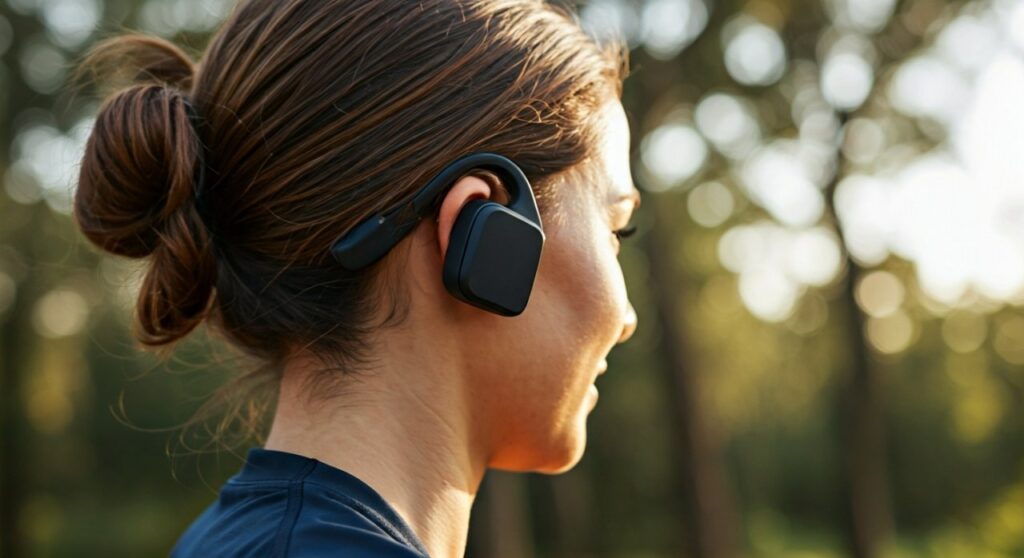
If you have ever felt the vibration of your own voice while plugging your ears, you have experienced the fundamental principle of bone conduction. Unlike traditional earbuds that push sound waves through the air and into your ear canal, bone conduction headphones utilize specialized transducers to send rhythmic pulses through the zygomatic bone.
For athletes, individuals with certain types of hearing loss, or office workers who need to stay “reachable,” this technology is a game-changer. In this guide, we will break down the mechanics, safety profiles, and practical usage of these unique audio devices based on extensive field testing and acoustic research.
Key Takeaways: Bone Conduction Technology at a Glance
If you are in a hurry, here is the essential information regarding how bone conduction headphones work and why they might be the right choice for you:
- Bypass the Eardrum: Sound travels through bone vibrations to the cochlea, leaving the ear canal open.
- Situational Awareness: Ideal for runners and cyclists who must hear traffic and ambient noise for safety.
- Comfort: No “plugged-in” feeling or ear canal irritation from traditional silicone tips.
- Hearing Health: While they don’t bypass the internal risks of high volume, they eliminate the risk of eardrum fatigue and “swimmer’s ear” infections.
- Audio Quality: Offers clear mids and highs, though bass response is typically lower than over-ear headphones.
What Are Bone Conduction Headphones?
To understand what is bone conduction headphones technology, we must first look at how we normally hear. Most audio devices use Air Conduction. These devices move air through the ear canal, hitting the eardrum, which then vibrates the tiny bones in the middle ear.
Bone conduction headphones are a specific category of “open-ear” audio. Instead of speakers, they use transducers that rest against the skin near your temples. These transducers convert electrical signals into physical vibrations.
When these vibrations hit your skull, they reach the inner ear (cochlea). The cochlea translates these vibrations into nerve impulses that your brain interprets as sound. This bypasses the outer and middle ear entirely, which is what bone conduction headphones mean in a functional sense.
The Step-by-Step Mechanics: How Bone Conduction Works
The process of how bone conduction headphones work can be broken down into four distinct phases. This sophisticated chain of events ensures you hear audio clearly without blocking your ears.
Electrical Signal Conversion
The process begins when your smartphone or computer sends an audio signal via Bluetooth to the headphones. The internal processor decodes this digital signal into an electrical current.
The Role of Transducers
Instead of a vibrating cone (found in traditional speakers), bone conduction headphones use electromagnetic transducers. These components create mechanical force. As the electrical current fluctuates, the transducer vibrates at specific frequencies corresponding to the music or voice.
Vibration Transfer via the Zygomatic Bone
The headphones are designed to exert a gentle “clamping” force. This ensures the transducers stay in firm contact with your zygomatic bone (the cheekbone). The vibrations move from the transducer, through the skin, and into the bone structure of the skull.
Direct Stimulation of the Cochlea
The vibrations travel through the temporal bone until they reach the cochlea, the fluid-filled organ of the inner ear. The hair cells inside the cochlea move in response to these vibrations, triggering the auditory nerve. Your brain then processes this as the song or podcast you are listening to.
Comparison: Bone Conduction vs. Air Conduction
Understanding the differences between these two technologies helps determine which is best for your lifestyle.
| Feature | Bone Conduction | Traditional Air Conduction |
|---|---|---|
| Primary Path | Cheekbones & Skull | Ear Canal & Eardrums |
| Ear Status | Fully Open (Situational Awareness) | Blocked or Covered |
| Bass Response | Moderate / Low | High / Deep |
| Privacy | High (with modern tech) | Maximum (In-ear seals) |
| Best Use Case | Outdoor Sports / Office / Safety | Critical Listening / Commuting |
| Hearing Aid Use | Compatible with many types | Often incompatible |
How to Wear Bone Conduction Headphones Correctly
Many new users ask how to wear bone conduction headphones because they look significantly different from standard gear. Improper placement can lead to poor sound quality or discomfort.
- Placement of the Hook: The wraparound band should go behind your head, resting just above your neck.
- Position the Transducers: The vibrating pads should rest on your cheekbones, specifically the area right in front of your ear tragus.
- Check the Ear Opening: Do not place the transducers inside or over the ear opening. Your ear canal must remain completely unobstructed.
- Adjust the Band: If you are learning how to wear open ear bone conduction headphones, ensure the band doesn’t snag on a helmet or glasses. Most models, like the Shokz OpenRun, are designed to sit comfortably alongside eyewear.
Are Bone Conduction Headphones Good for Your Ears?
A common question among audiophiles and health-conscious users is: are bone conduction headphones better for your ears? The answer involves several layers of hearing health.
Preventing Eardrum Damage
Because how bone conduction headphones work involves bypassing the eardrum, they eliminate the risk of eardrum perforation or fatigue caused by direct air pressure. This makes them a safer alternative for people with sensitive eardrums or histories of middle-ear infections.
Can Bone Conduction Headphones Cause Hearing Loss?
It is a myth that these headphones are “risk-free” for your hearing. Do bone conduction headphones cause hearing loss? Yes, they can if used at excessively high volumes. The cochlea is still being stimulated, and prolonged exposure to high-decibel vibrations can damage the delicate hair cells in the inner ear.
Expert Perspective on Ear Hygiene
From my experience testing various models over the last five years, one of the biggest benefits is hygiene. Traditional earbuds can trap moisture and bacteria in the ear canal, leading to Otitis Externa (Swimmer’s Ear). Using bone conduction headphones keeps the ear canal dry and ventilated, which is significantly better for long-term ear health.
Do Bone Conduction Headphones Sound Good?
Whether do bone conduction headphones sound good depends entirely on your expectations. If you are comparing them to $500 studio-grade over-ear headphones, you will likely find the bass lacking.
- Clarity: Modern units like the Shokz OpenRun Pro offer exceptional clarity for vocals and mid-range instruments.
- The “Vibration” Sensation: At high volumes, you may feel a slight “tickle” on your cheekbones. This is a natural result of how bone conduction headphones work.
- Leakage Concerns: Can others hear bone conduction headphones? In older models, sound leakage was a major issue. However, newer leak-slayer technology ensures that unless someone is within a few inches of you, they won’t hear your audio.
The Best Bone Conduction Headphones for Specific Needs
Choosing the right pair depends on your primary activity. Based on objective performance data, here are the top recommendations:
- Best for Running: Shokz OpenRun. Its IP67 rating makes it sweatproof and dustproof, and its lightweight frame stays secure during sprints.
- Best for Swimming: Shokz OpenSwim. Since Bluetooth doesn’t travel well through water, these use internal MP3 storage to provide music while you lap.
- Best for Work: Creative Outlier Free. These provide excellent battery life and multi-point pairing for switching between your phone and laptop.
- Best for Gaming: are bone conduction headphones good for gaming? They are excellent for casual gaming where you need to hear family members or the doorbell. However, for competitive shooters, traditional headsets offer better spatial “3D” imaging.
Can I Use Bone Conduction Headphones as a Hearing Aid?
One of the most profound uses of this technology is for individuals with conductive hearing loss.
If the outer or middle ear is damaged but the cochlea is healthy, bone conduction can act as a bridge. While they are not a direct replacement for medical-grade hearing aids, many users find that they can hear digital audio much better through bone conduction than through traditional speakers. Always consult an audiologist before using them for this purpose.
Practical Tips for First-Time Users
- Trial Period: It takes about 2-3 days for your brain to get used to hearing sound “internally” while also hearing ambient noise.
- Binaural Beats: Do binaural beats work with bone conduction headphones? Yes, because the two separate channels (left and right) are still delivered independently to the cochlea, the brain can still perceive the frequency difference.
Frequently Asked Questions (FAQs)
Can other people hear my music when I use bone conduction headphones?
At normal volume levels (under 70%), can others hear your music with bone conduction headphones? Very rarely. High-quality models use phase-canceling tech to minimize sound leakage. At maximum volume, a person sitting right next to you might hear a faint tinny sound.
Are bone conduction headphones worth it?
Yes, are bone conduction headphones worth it specifically for athletes, outdoor enthusiasts, and those with ear canal sensitivity. They provide a level of safety that traditional headphones simply cannot match.
Do bone conduction headphones damage hearing?
Do bone conduction headphones damage hearing? Only if used irresponsibly. Like any audio device, listening at volumes above 85 decibels for extended periods can cause permanent cochlear damage.
What are the best bone conduction headphones for running?
The Shokz OpenRun is widely considered the gold standard for runners due to its 8-hour battery life, quick-charge feature, and titanium frame that doesn’t bounce.
Does bone conduction work for everyone?
Does bone conduction headphones work for the vast majority of people? Yes. However, if you have sensorineural hearing loss (damage to the cochlea or auditory nerve), bone conduction will not bypass that specific issue.