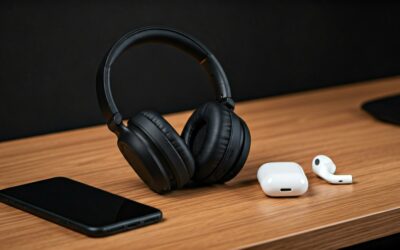
Understanding Modern Audio Architecture: Are Headphones a Computer?
Technically, modern wireless and noise-canceling headphones are computers classified as embedded systems. While they don’t look like a desktop PC, they contain microprocessors, memory, firmware, and input/output systems to process digital data into sound.
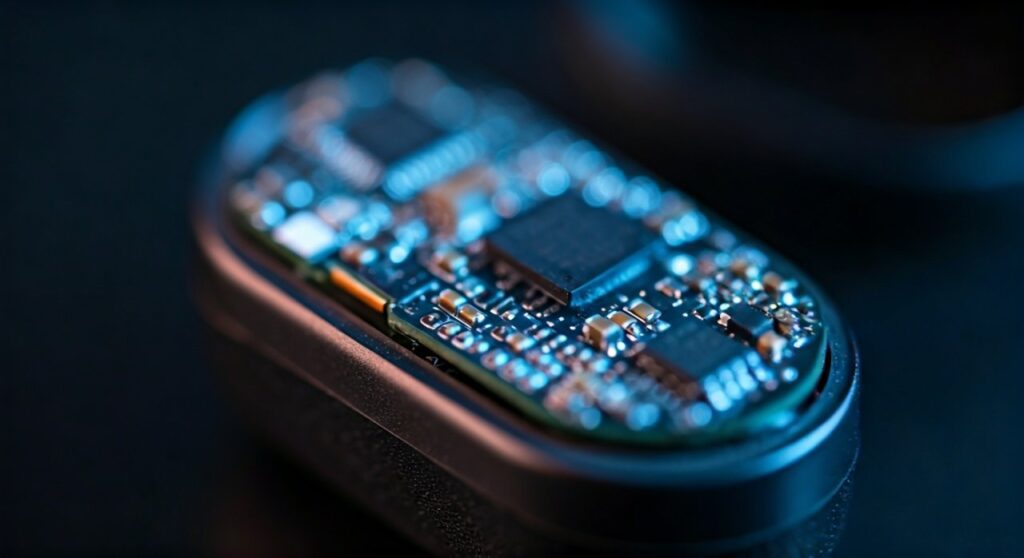
If your headphones require a battery, a firmware update, or use Bluetooth, they possess the essential architecture of a specialized computing device. In this guide, we will break down the technical components that prove is a headphones a computer and how this technology impacts your daily listening experience.
Key Takeaways: Why Headphones Are Now Computers
- Embedded Systems: Modern headphones (like AirPods Pro or Sony WH-1000XM5) use specialized chips called SoCs (System on a Chip).
- Digital Signal Processing (DSP): This is the “brain” that calculates how to cancel noise or equalize audio in real-time.
- Software Dependency: If a device runs firmware and requires software updates to fix bugs, it functions as a computer.
- Power Requirement: Analog headphones are passive (not computers), whereas digital/wireless headphones are active (computers).
Defining the “Brain”: Why Are Headphones Considered a Computer?
To understand if are headphones computers, we must first define what a computer actually is. A computer is any programmable electronic device that processes data, performs calculations, and produces an output.
When you use a pair of high-end wireless earbuds, the device isn’t just “playing” sound. It is receiving a stream of binary code (0s and 1s) via Bluetooth, decoding that data using a CPU, and then using an algorithm to optimize the frequency response.
Most modern headphones utilize ARM Cortex-M series processors or proprietary silicon like the Apple H2 chip. These processors manage everything from battery life to the complex math required for Active Noise Cancellation (ANC).
The Components: How Headphones Mimic PC Architecture
When we ask, is headphones a computer, we can look at the internal hardware. You will find almost every component found in a standard laptop, just shrunk down to a microscopic scale.
The Central Processor (SoC)
The “Heart” of the device is the System on a Chip. For example, the Qualcomm QCC series chips found in many Android-compatible headphones include a processor, a radio for Bluetooth, and a power management unit.
Memory (RAM and Flash)
Headphones have small amounts of RAM to handle immediate audio buffering. They also feature Flash memory to store the firmware—the operating system that tells the headphones how to behave.
Digital-to-Analog Converter (DAC)
A computer works in digital, but our ears work in analog. The DAC is a specialized processor that translates digital bits into the electrical signals that move the headphone drivers.
Operating System (RTOS)
Headphones run a Real-Time Operating System (RTOS). This is a lightweight OS designed to perform tasks with zero latency, ensuring your music doesn’t lag when you press “play.”
Comparison: Analog vs. Digital Headphones
| Feature | Analog Headphones (Not a Computer) | Digital/Wireless Headphones (Is a Computer) |
|---|---|---|
| Power Source | None (Powered by the Jack) | Internal Battery Required |
| Processing | Physical Vibration Only | Digital Signal Processing (DSP) |
| Connectivity | 3.5mm or 6.35mm Cable | Bluetooth, USB-C, or Lightning |
| Updates | Never (Hardware is static) | Requires Firmware Updates |
| Example | Sennheiser HD600 | Bose QuietComfort Ultra |
Step-by-Step: How to Identify If Your Headphones Are a Computer
Not every pair of headphones fits the “computer” description. Follow these steps to determine the technical status of your gear.
Step 1: Check the Connection Type
If your headphones use a 3.5mm audio jack and have no buttons or batteries, they are purely analog transducers. However, if they connect via Bluetooth or USB-C, they must use a computer chip to handshake with your source device.
Step 2: Look for an Associated App
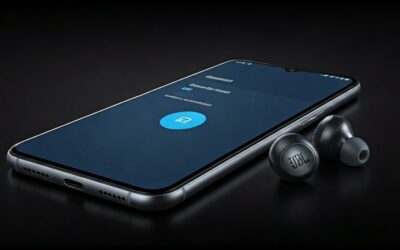
Does your manufacturer (like Sony, JBL, or Sennheiser) ask you to download an app? If the device can communicate with an app to change “EQ settings” or “button mapping,” it is running a programmable interface, making it a computer.
Step 3: Test for Active Noise Cancellation (ANC)
ANC is the ultimate proof of computing. To cancel noise, the headphones use external microphones to “listen” to the environment. An internal processor then calculates the “anti-noise” wave in milliseconds. This is a high-level computational task.
Step 4: Verify Firmware Update Capabilities
Check your settings menu. If there is a version number (e.g., Version 4.5.2), your headphones are running software. Only computers run software that can be patched or upgraded over time.
The Role of DSP: The Mathematical Core of Modern Audio
The primary reason are headphones considered a computer today is the rise of Digital Signal Processing (DSP). In the past, the sound quality was determined solely by the physical magnets and wires.
Today, engineers use DSP to “cheat” physics. If a small earbud lacks bass, the internal computer is programmed to boost those specific frequencies digitally. This allows tiny devices to sound like massive speakers.
Computational Audio is the term used by companies like Apple and Google. It refers to the computer using machine learning to adjust the sound 200 times per second based on the fit of the earbud in your ear.
Potential Risks: Can Your “Headphone Computer” Be Hacked?
Because we have established that is a headphones a computer, we must address security. Any device with a processor, memory, and a wireless connection is theoretically vulnerable.
- Blueborne Vulnerabilities: Hackers can sometimes exploit the Bluetooth stack of the headphone’s OS.
- Data Collection: Smart headphones often track usage data, which is sent back to the manufacturer via the companion app.
- Bricking: A failed firmware update can “brick” your headphones, rendering the hardware useless because the “computer” inside crashed.
Expert Perspective: The Future of Wearable Computing
As an audio engineer who has dismantled dozens of units, I have seen the transition firsthand. Ten years ago, a headphone teardown revealed copper wire and paper cones. Today, a teardown of the AirPods Max reveals two 10-core H1 chips, complex circuit boards, and more computing power than the Apollo 11 guidance computer.
We are moving toward a world where headphones are “Hearables”—computers you wear in your ears. Future models will likely include:
- On-board Translation: Real-time language processing without a phone.
- Biometric Sensing: Monitoring heart rate and body temperature via the ear canal.
- Edge AI: Local voice assistants that don’t need the cloud to function.
FAQs: Frequently Asked Questions
Are all Bluetooth headphones computers?
Yes, all Bluetooth headphones contain a microcontroller and a radio frequency (RF) chip to decode wireless signals, which classifies them as specialized computers.
Can headphones work without a computer chip?
Yes. Traditional wired headphones are passive devices. They rely on the device they are plugged into (like a phone or amplifier) to do all the computing and “push” the electrical signal.
Do headphones have a CPU?
Wireless and noise-canceling headphones have a Central Processing Unit (CPU), usually integrated into a System on a Chip (SoC). This manages audio processing and battery functions.
Why do my headphones need software updates?
They need updates because they are computers. Manufacturers release firmware updates to improve the Bluetooth stability, refine the ANC algorithms, and fix security vulnerabilities.
Is a headset a computer if it only has a microphone?
If the headset is a simple analog plug-in, no. If it is a USB or Wireless gaming headset, it contains a sound card and processing chips, making it a computer.