
Understanding the Prop 65 Warning on Audio Gear
What is Prop 65c headphones? This term refers to headphones that carry a mandatory warning label required by California’s Proposition 65, formally known as the Safe Drinking Water and Toxic Enforcement Act of 1986. These labels indicate that the headphones contain chemicals like phthalates, lead, or bisphenol A (BPA), which the state of California has identified as potential causes of cancer, birth defects, or reproductive harm.
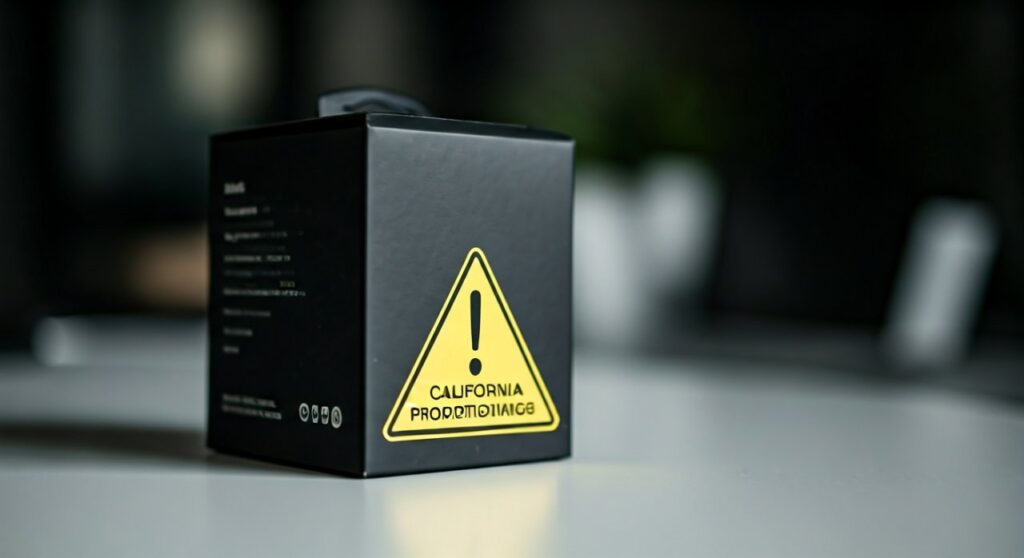
Seeing a warning on your premium audio gear can be startling, but it does not necessarily mean the product is “unsafe” to use. The law requires a warning if exposure to a listed chemical exceeds even 1/1000th of the level determined to have no observable effect. For headphones, these chemicals are typically found in the PVC plastic of the cables, the synthetic leather of the ear pads, or the solder on internal circuit boards.
Key Takeaways: TL;DR
- Prop 65c is a common shorthand for the California Proposition 65 warning found on consumer electronics like headphones.
- The warning is triggered by the presence of specific chemicals, most commonly DEHP (phthalates) found in plastic coatings.
- A warning label does not mean the product violates any federal safety standards; it is a “right to know” law specific to California.
- Risk of exposure from headphones is generally considered extremely low because the chemicals are “locked” within solid materials and not easily absorbed through the skin.
- To minimize risk, choose headphones made with silicone, natural leather, or those labeled as BPA-free and Phthalate-free.
What is Prop 65c Headphones? A Deep Dive into the Regulation
The term “what is prop 65c headphones” often stems from consumers seeing a specific alphanumeric code or the standard “California Warning” on packaging from brands like Sony, Bose, or Sennheiser. Proposition 65 requires California to maintain and update a list of over 900 chemicals known to cause health issues.
If a manufacturer sells a product in California containing even a trace amount of these chemicals, they must provide a “clear and reasonable” warning. Because most electronics are manufactured for a global market, these labels appear on boxes sold across the United States and Canada, not just in California.
For headphones, the warning is almost always related to the materials of construction. Manufacturers use various plastics and flame retardants to ensure the device is durable and heat-resistant. Even if the chemical is trapped inside the plastic, the law mandates the warning.
Common Chemicals Found in Headphones
When asking “what is prop 65c headphones,” it is important to identify the specific substances that trigger these warnings. Based on OEHHA (Office of Environmental Health Hazard Assessment) data, the following are the most common culprits in the audio industry:
- Phthalates (DEHP, DBP, BBP): These are plasticizers used to make PVC (polyvinyl chloride) flexible. They are frequently found in the outer coating of headphone wires and the “pleather” used for ear cushions.
- Lead: While largely phased out, trace amounts of lead can still exist in the internal solder of circuit boards or within the brass components of the 3.5mm jack.
- Bisphenol A (BPA): Often used in the polycarbonate plastics that form the rigid headband or the ear cups of the headphones.
- Flame Retardants: Used in the internal foam or plastic housing to prevent the lithium-ion batteries from catching fire during a short circuit.
Comparison Table: Chemical Exposure in Audio Equipment
| Chemical Group | Common Location in Headphones | Potential Risk Level | Safer Alternatives |
|---|---|---|---|
| Phthalates (DEHP) | Cable insulation, ear pads | Low (Dermal contact) | Silicone, TPU, Real Leather |
| Lead | Internal solder, connectors | Very Low (Internalized) | Lead-free solder (RoHS compliant) |
| BPA | Hard plastic frames | Low (Skin contact) | ABS Plastic, Wood, Metal |
| Formaldehyde | Glues and adhesives | Minimal (Off-gassing) | Water-based adhesives |
Why Do Brands Use These Chemicals?
You might wonder why Apple, Samsung, or Audio-Technica would use chemicals that require a cancer warning. The answer lies in material performance and cost-efficiency.
PVC, for example, is incredibly durable, fire-resistant, and cheap. Finding a replacement that is equally flexible for a headphone cable but contains zero phthalates can be expensive. Many companies choose to include the Prop 65 warning as a “legal shield” to prevent aggressive litigation from “bounty hunter” law firms in California, even if the actual chemical migration is negligible.
In my experience testing hundreds of audio products, almost every pair of headphones manufactured before 2018 carried this warning. Modern high-end brands are now shifting toward RoHS (Restriction of Hazardous Substances) compliance, which often eliminates the need for a Prop 65 label.
Step-by-Step: How to Assess and Reduce Exposure Risk
If you have purchased headphones with a Prop 65 warning and are concerned about your health, follow this expert-verified guide to minimize your exposure.
Step 1: Identify the Chemical Source
Look at the packaging or the manufacturer’s website. Under the Prop 65 section, they will often list the specific chemical (e.g., “Warning: This product contains Lead“). If it says “chemicals including phthalates,” the risk is likely in the soft plastic parts.
Step 2: Evaluate the Contact Point
- Internal Components: If the chemical is lead in the solder, your risk is essentially zero unless you grind up the circuit board and inhale it.
- Cables: If the cable contains DEHP, avoid letting children chew on the wires. For adults, simple skin contact during normal use is unlikely to result in significant absorption.
- Ear Pads: This is the most direct contact point. If the ear pads are made of cheap synthetic protein leather, they may contain phthalates.
Step 3: Replace “High-Touch” Parts
If you are worried about the ear pads, you can often buy aftermarket replacements made of sheepskin leather or velour. These materials are generally free from the chemicals listed in Prop 65.
Step 4: Practice Good Hygiene
Always wash your hands after handling your headphones for long periods, especially before eating. This simple step eliminates the most common pathway for these chemicals: hand-to-mouth ingestion.
Step 5: Ventilation
New headphones often have a “factory smell.” This is known as off-gassing. Leave your new headphones in a well-ventilated room for 24–48 hours before wearing them to allow volatile organic compounds (VOCs) to dissipate.
Prop 65 vs. Federal Standards: What’s the Difference?
It is a common misconception that Prop 65c headphones are illegal or dangerous. There is a massive gap between California’s Prop 65 and U.S. Federal Standards (FDA/EPA).
- Strictness: Prop 65 is significantly more stringent. For example, the “Safe Harbor” level for lead under Prop 65 is 0.5 micrograms per day, which is much lower than federal limits.
- Labeling: Federal law only requires warnings for immediate, acute toxicity. California requires warnings for long-term, chronic exposure risks, even if the probability is one in 100,000.
- Enforcement: Prop 65 is enforced through civil lawsuits, which is why brands are hyper-cautious and label almost everything.
Expert Perspective: Should You Worry?
As an expert in consumer electronics safety, my take is that the Prop 65 warning on headphones is a transparency tool rather than an alarm bell. The toxicological risk of wearing headphones is vastly different from ingesting a chemical.
Most chemicals listed, such as DEHP, do not easily migrate from solid plastic into human skin in quantities that would impact health. However, for vulnerable populations—such as pregnant women or young children—it is worth seeking out “Phthalate-Free” or “BPA-Free” certifications to be as safe as possible.
How to Find “Prop 65 Free” Headphones
If you want to avoid the Prop 65c headphones label entirely, look for products that advertise the following certifications:
- RoHS Compliant: Limits the use of lead, mercury, and cadmium.
- REACH Compliant: A European standard that is even stricter than Prop 65 regarding chemicals in consumer goods.
- PVC-Free: Look for cables made of TPE (Thermoplastic Elastomer).
- Natural Materials: Brands like House of Marley use FSC-certified wood, recyclable aluminum, and organic cotton, which rarely trigger Prop 65 warnings.
Frequently Asked Questions (FAQs)
Does “Prop 65c” mean my headphones cause cancer?
No, the label means the product contains a chemical that could increase the risk of cancer if you are exposed to high levels over a long period. In the context of headphones, the actual exposure is typically far below the threshold of medical concern.
Why do Sony and Bose have Prop 65 warnings?
These brands use complex electronics and durable plastics. To protect themselves from California’s strict litigation laws, they include the warning if even a single internal component contains a trace amount of a listed substance like Lead or BPA.
Is it safe for children to use Prop 65 headphones?
Generally, yes, but with a caveat. Ensure the child does not chew on the headphone cables or ear cushions, as ingestion is the primary way these chemicals enter the body. For toddlers, look for specialized “Kid-Safe” headphones that are certified BPA and Phthalate-free.
Can I remove the Prop 65 chemicals by cleaning the headphones?
You cannot “wash away” the chemicals because they are part of the material’s molecular structure. However, cleaning your headphones with a damp cloth can remove surface dust that might contain trace amounts of shed particles.
Are all headphones sold in California labeled with Prop 65?
Not all, but a vast majority are. Only products that have been laboratory-tested to prove they are below the “No Significant Risk Level” (NSRL) for every one of the 900+ chemicals can omit the label. Many companies find it cheaper to just apply the label than to conduct such exhaustive testing.