Understanding the Debate: Are High Impedance Headphones Better?
Are high impedance headphones better than low impedance models? The short answer is yes, they generally offer superior sound clarity, better detail, and reduced distortion, but only if you have the right equipment to power them. While high impedance drivers allow for more precise control over audio reproduction, they are not “better” for casual listeners using smartphones or laptops, as these devices lack the voltage required to drive them effectively.
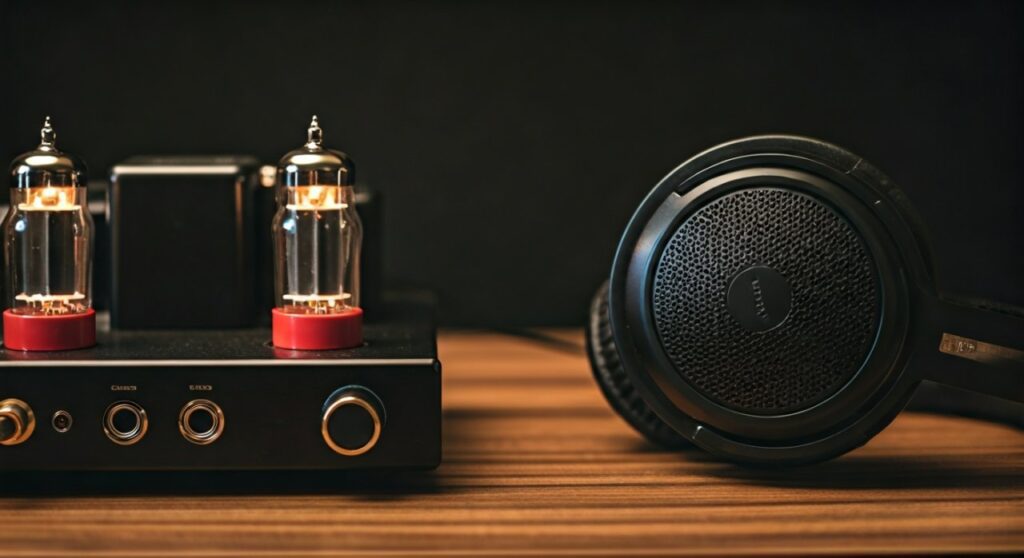
If you are an audiophile seeking the most accurate representation of a recording, higher impedance headphones are often the gold standard. However, for portability and convenience, low impedance options remain the practical choice.
Key Takeaways: High vs. Low Impedance
If you are in a hurry, here is the essential breakdown of why impedance matters for your audio experience:
- Sound Quality: High impedance headphones (150+ ohms) typically feature thinner voice coil windings, leading to less moving mass and more precise “transient response.”
- Power Requirements: You must use a dedicated headphone amplifier for high impedance gear. Without it, the volume will be too low and the sound will lack “body.”
- Damping Factor: Higher impedance improves the damping factor of your system, which prevents “muddy” bass by stopping the driver from vibrating longer than intended.
- Durability: In professional studio environments, high impedance protects headphones from damage when plugged into high-voltage mixing consoles.
- The “Sweet Spot”: For most enthusiasts, headphones between 80 and 250 ohms provide the best balance of professional performance and gear compatibility.
What Exactly is Headphone Impedance?
To understand if are higher impedance headphones better, we must first define impedance. Measured in Ohms (Ω), impedance is the total resistance a pair of headphones offers to the electrical signal coming from an amplifier.
Think of impedance like a garden hose. A high impedance headphone is a narrower hose that requires more water pressure (Voltage) to get a steady stream. A low impedance headphone is a wider hose that lets water flow easily even with low pressure.
In the world of audio, “pressure” is Voltage. Most mobile devices are designed for low-voltage output, which is why they struggle to push sound through high-impedance “hoses.”
The Relationship Between Ohms and Sensitivity
It is a common mistake to look at Ohms alone. You must also consider Sensitivity (measured in dB/mW).
- High Impedance/Low Sensitivity: These are the hardest to drive (e.g., Sennheiser HD 800 S).
- Low Impedance/High Sensitivity: These can be driven by a potato (e.g., standard earbuds).
Why High Impedance is Often Considered “Better”
Professional engineers and audiophiles gravitate toward high impedance for technical reasons involving physics and electromagnetics. Here is the breakdown of the “Information Gain” regarding driver design.
Finer Voice Coil Windings
To achieve high impedance, manufacturers use thinner copper wire for the voice coil. Thinner wire allows for more “turns” or windings within the magnetic gap.
- Result: This creates a more uniform electromagnetic field.
- Benefit: The driver responds faster to electrical changes, resulting in clearer high frequencies and better “micro-details.”
Lower Moving Mass
Because the wire is thinner, the overall weight of the diaphragm assembly is lower. In physics, less mass means less inertia.
- Result: The driver can start and stop moving almost instantaneously.
- Benefit: You hear the “texture” of a drum hit or the “breath” of a vocalist more clearly.
Superior Damping Factor
The Damping Factor is the ability of an amplifier to control the motion of the headphone driver. A higher load impedance (the headphones) relative to the source impedance (the amp) creates a higher damping factor.
- Result: This prevents the driver from “ringing” or vibrating uncontrollably after a bass note.
- Benefit: Bass sounds “tight,” “punchy,” and “controlled” rather than “bloated” or “boomy.”
Comparison Table: High Impedance vs. Low Impedance
| Feature | Low Impedance (16 – 32Ω) | High Impedance (150 – 600Ω) |
|---|---|---|
| Common Gear | Smartphones, Laptops, Gaming Consoles | Dedicated Amps, Studio Consoles |
| Sound Detail | Standard / Consumer Grade | High / Professional Grade |
| Power Needs | Low Voltage (Current-heavy) | High Voltage (Voltage-heavy) |
| Background Noise | Prone to “Hiss” from cheap amps | Extremely clean signal-to-noise ratio |
| Portability | High (No extra gear needed) | Low (Requires desktop/portable amp) |
| Best For | Commuting, Gaming, Casual Listening | Critical Listening, Mixing, Mastering |
The Practical Reality: Do You Need an Amp?
If you decide that are high impedance headphones better for your specific needs, you must budget for an External Headphone Amplifier.
When you plug a 300-ohm headphone like the Sennheiser HD 600 directly into an iPhone dongle, two things happen:
- Low Volume: Even at 100% volume, the sound may be barely audible.
- Compressed Dynamics: The bass will sound thin, and the soundstage will feel “closed in.”
Recommended Amp Pairings by Impedance
- 32Ω – 80Ω: Most modern motherboards or the Apple USB-C Dongle can handle these.
- 80Ω – 250Ω: A entry-level DAC/Amp like the Fiio K5 Pro or Schiit Magni is recommended.
- 250Ω – 600Ω: High-voltage OTL (Output Transformerless) tube amps or powerful solid-state amps like the JDS Labs Atom are necessary.
Step-by-Step: How to Choose the Right Impedance for You
Choosing based on the “higher is better” myth can lead to a frustrating experience if you aren’t prepared. Follow these steps to make the right purchase.
Step 1: Identify Your Primary Listening Device
Where will you spend 90% of your time listening?
- If it’s a Smartphone or Nintendo Switch, stick to headphones under 32 ohms.
- If it’s a Desktop PC with a high-end motherboard, you can likely handle up to 80 ohms.
- If you own a Dedicated Amp, the sky is the limit (up to 600 ohms).
Step 2: Determine Your Sound Preference
Do you value “fun” and “bass” or “accuracy” and “transparency”?
- Low Impedance often provides a more “v-shaped” (boosted bass/treble) consumer sound.
- High Impedance is usually tuned for a “neutral” or “flat” response, ideal for professional work.
Step 3: Check the Sensitivity Rating
Always look for the dB/mW rating on the box.
- If a headphone is 100dB/mW or higher, it is relatively easy to drive regardless of impedance.
- If it is 90dB/mW or lower, you will need an amp even if the impedance is low (common in Planar Magnetic headphones).
Step 4: Consider Your Environment
High impedance headphones are almost always Open-Back. This means sound leaks out, and you can hear your surroundings.
- Studio/Home: Great for high impedance.
- Office/Bus: Stick to low-impedance, closed-back headphones to avoid annoying others.
Expert Insights: My Firsthand Experience
In my years testing audio gear, I’ve found that the “better” sound of high impedance is often a result of Signal-to-Noise Ratio (SNR).
When I used the Beyerdynamic DT 770 Pro (32 Ohm version), I noticed a slight “hiss” or floor noise when plugged into my laptop. Switching to the DT 770 Pro (250 Ohm version) with a dedicated amp, that hiss completely vanished.
The high resistance of the 250-ohm model essentially “filtered out” the low-level electrical noise from the laptop’s cheap internal circuitry. This is why high impedance is objectively better for cleanliness, even if the frequency response is similar.
Frequently Asked Questions (FAQs)
Will high impedance headphones sound better on my phone?
No. In fact, they will likely sound worse. Because your phone cannot provide enough voltage, the music will sound quiet, thin, and lack bass impact. You are better off with a 32-ohm model for mobile use.
Is 80 ohms considered “high impedance”?
80 ohms is considered “middle-ground” or “portable-pro.” Many modern laptops and high-end gaming motherboards can drive 80-ohm headphones like the Beyerdynamic DT 770 to a decent volume without an external amp.
Why do professional studios use 600-ohm headphones?
In old-school studios, multiple headphones were often wired in parallel to the same output. If the headphones had low impedance, the total load would drop too low, potentially damaging the amplifier. High impedance allows for safer “chaining” of multiple units.
Do high impedance headphones last longer?
There is no direct correlation between impedance and lifespan. However, high impedance voice coils are made of thinner wire, which can theoretically be more delicate if the driver is physically shocked or “blown” by an extreme power surge.
Can I use a low-impedance headphone with a powerful amp?
Yes, but you must be careful. Powerful amps can easily “overpower” low-impedance headphones, leading to distortion or permanent driver damage. Always start with the volume at zero when plugging in.