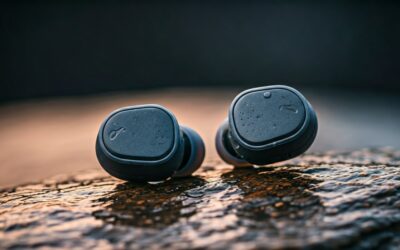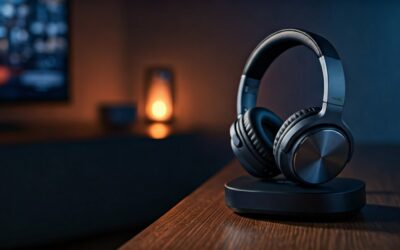
Whether In-Ear Monitors (IEMs) are better than headphones depends entirely on your environment, sound signature preference, and intended use. IEMs are superior for noise isolation, portability, and micro-detail retrieval, making them the gold standard for stage performers and commuters. Headphones, particularly open-back models, offer a superior “soundstage” and long-term physical comfort that IEMs cannot match.
Key Takeaways: IEMs vs. Headphones at a Glance
Before we dive into the technical details, here is a quick summary to help you decide which side of the audio fence you land on.
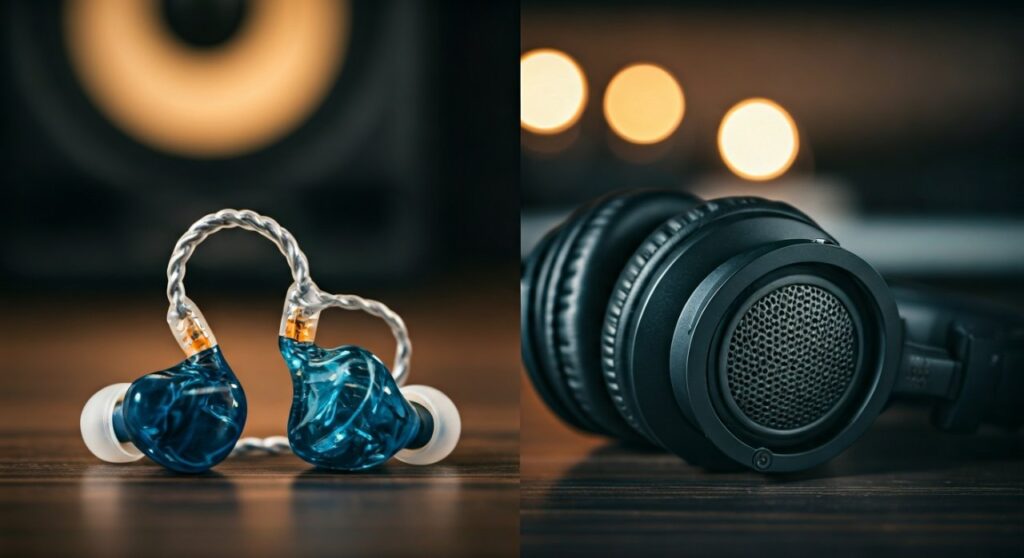
| Feature | In-Ear Monitors (IEMs) | Over-Ear Headphones |
|---|---|---|
| Portability | Extremely high; fits in a pocket. | Bulkier; requires a dedicated bag. |
| Noise Isolation | Excellent (up to -26dB to -35dB). | Moderate (unless Active Noise Cancelling). |
| Soundstage | “Inside-the-head” feeling. | Wide, “out-of-head” spatial experience. |
| Detail Retrieval | Exceptional surgical precision. | Natural and organic textures. |
| Long-term Comfort | Can cause ear canal fatigue. | Generally more comfortable for 4+ hours. |
| Best For | Stage, commuting, critical monitoring. | Studio mixing, home listening, gaming. |
Why the Debate Matters for Your Ears
Choosing between In-Ear Monitors and Headphones isn’t just about brand names like Sennheiser, Sony, or Campfire Audio. It is about how sound interacts with your anatomy.
In my years of testing high-end audio gear, I have found that listeners often confuse “loudness” with “clarity.” IEMs sit directly inside your ear canal, bypassing much of your outer ear (the pinna). This creates a direct-to-brain sound experience that can be breathtakingly detailed but physically taxing.
Headphones, conversely, allow sound waves to interact with your outer ear. This mimics how we hear sounds in the real world, providing a sense of distance and space that IEMs often struggle to replicate.
Step 1: Evaluate Your Listening Environment
The first step in deciding if IEMs are better for you is looking at where you spend 80% of your listening time.
The Case for IEMs in Loud Spaces
If you are a frequent traveler or a live musician, IEMs are the clear winner. Because they create a physical seal in the ear canal, they offer passive noise isolation that outperforms most Active Noise Cancelling (ANC) headphones.
- Passive Isolation: A well-fitted pair of Etymotic or Shure IEMs can block out up to 35dB of ambient noise.
- Consistency: Unlike ANC, which can struggle with high-frequency sounds, IEMs block out a broad spectrum of noise consistently.
The Case for Headphones in Quiet Spaces
If you are sitting in a home office or a quiet studio, the isolation of IEMs might feel “claustrophobic.” Open-back headphones, such as the Sennheiser HD600 or Hifiman Sundara, allow air and sound to pass through the ear cups. This prevents pressure buildup and creates a “natural” sound that feels like you are sitting in a room with speakers.
Step 2: Compare Soundstage vs. Detail Retrieval
This is where the technical “superiority” of one over the other becomes a matter of taste.
Surgical Precision with IEMs
IEMs often use Balanced Armature (BA) drivers. These are tiny, incredibly fast drivers that can reproduce minute details in a recording.
If you are a professional monitoring a vocal track and need to hear every breath or mouth click, IEMs like the 64 Audio U12t offer a level of transparency that is hard to find in headphones at the same price point.
The “Grandeur” of Headphones
The biggest weakness of IEMs is the “soundstage”—the perceived 3D space of the music. Because the sound is injected directly into the canal, it often feels like it’s coming from the center of your skull.
Over-ear headphones use much larger drivers (typically 40mm to 50mm). These larger diaphragms move more air, providing a physical “slam” and a wide spatial image. For orchestral music or cinematic gaming, headphones provide a scale that IEMs simply cannot simulate.
Step 3: Analyze Physical Comfort and “Ear Fatigue”
How long do you plan to wear your gear? This is a critical factor in the “better” argument.
Understanding Ear Canal Fatigue
IEMs require a tight seal to produce bass. Over several hours, the pressure of the silicone or foam tips against the sensitive skin of your ear canal can cause discomfort.
- Expert Tip: If you choose IEMs, invest in Comply Foam Tips. They mold to your ear shape and reduce the “itchy” sensation common with silicone.
The Weight Factor in Headphones
While headphones avoid ear canal irritation, they introduce two other issues: clamp force and weight.
Heavy Planar Magnetic headphones can lead to neck strain after several hours. However, for most users, a lightweight pair of over-ears like the Bose QuietComfort series remains the gold standard for “all-day” wearability.
Step 4: Consider Technical Requirements and Amplification
Are you planning to use a dedicated Digital-to-Analog Converter (DAC) and Amplifier, or just your smartphone?
- IEMs are efficient: Most IEMs have high sensitivity and low impedance. This means they can be driven to deafening volumes by a simple phone dongle.
- Headphones require power: High-end audiophile headphones often have high impedance (e.g., 300 ohms). Without a powerful desktop amplifier, these headphones will sound thin, quiet, and lifeless.
If you want a “plug-and-play” experience without carrying a portable amp, IEMs are objectively better for your lifestyle.
Step 5: Professional Use Cases – Which is Better?
To settle the debate, let’s look at how professionals use these tools.
- Live Musicians: IEMs are mandatory. They allow performers to hear their own mix while protecting their hearing from loud stage monitors.
- Mixing Engineers: Headphones are preferred. The natural soundstage helps in placing instruments correctly in a stereo field.
- Commuters/Gym-goers: IEMs are the only logical choice due to their sweat resistance and compact size.
- Gamers: Headphones (especially open-back) are usually better for “imaging”—the ability to tell exactly where an enemy’s footsteps are coming from.
Are In-Ear Monitors Better Than Headphones? The Verdict
There is no “perfect” audio device. However, we can reach a definitive conclusion based on your priorities:
Choose In-Ear Monitors if:
- You prioritize portability and want to fit your gear in your pocket.
- You need the highest possible noise isolation for travel or stage work.
- You love micro-details and “clinical” sound signatures.
- You want a device that doesn’t require a bulky external amplifier.
Choose Over-Ear Headphones if:
- You want a wide, immersive soundstage for movies and gaming.
- You suffer from ear canal irritation or find objects in your ears uncomfortable.
- You primarily listen in a controlled, quiet environment.
- You prefer a more natural, organic sound representation.
Frequently Asked Questions
Do IEMs cause more hearing damage than headphones?
Not necessarily. In fact, because IEMs block out external noise so effectively, users often listen at lower volumes than they would with headphones. Hearing damage is caused by volume (decibels) and duration, not the proximity of the driver to the eardrum.
Can I use IEMs for gaming?
Yes. Professional eSports players often wear IEMs under bulky noise-canceling earmuffs during tournaments. While the soundstage is smaller, the “imaging” (directionality) of high-end IEMs like the Moondrop Blessing 3 is exceptionally sharp.
Why are some IEMs so expensive?
High-end IEMs often use “tribrid” configurations, combining Dynamic Drivers, Balanced Armatures, and Electrostatic Drivers in a space smaller than a grape. The engineering required to phase-align these drivers is incredibly complex.
Are “Earbuds” the same as “IEMs”?
No. Earbuds (like the original wired Apple EarPods) sit on the outer ear and do not seal the canal. IEMs (In-Ear Monitors) are designed to be inserted into the canal to create an airtight seal, which is essential for bass response and isolation.
Which lasts longer, IEMs or Headphones?
Headphones generally have a longer lifespan because their cables and ear pads are easily replaceable. IEMs are more susceptible to moisture and wax buildup, though many modern versions now feature detachable 2-pin or MMCX cables to extend their life.