
TL;DR: Quick Installation Overview
To hang a projector screen successfully, you must prioritize wall stud alignment and perfect leveling. For most fixed-frame or pull-down screens, you will mark your mounting points, use a stud finder to ensure structural integrity, and secure the brackets with appropriate anchors or screws. If you cannot drill holes, look into heavy-duty adhesive strips or tension rods specifically designed for lightweight screens.
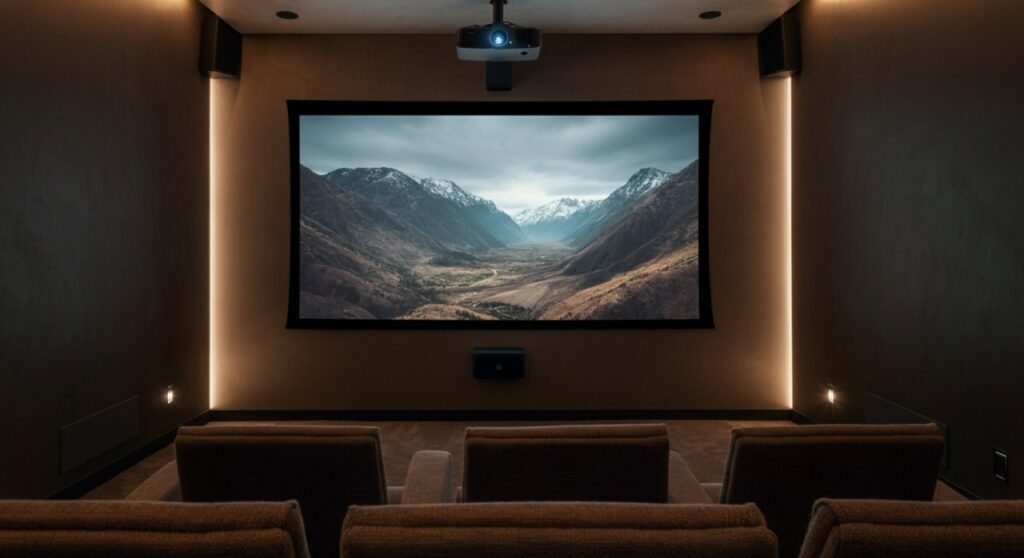
Understanding Your Projector Screen Type
Before you start the process of how to hang a projector screen, you need to identify your specific screen type. The mounting hardware and structural requirements differ significantly based on the model you purchased.
Common types include:
- Fixed-Frame Screens: These provide a flat, taut surface, perfect for dedicated home theaters.
- Manual Pull-Down Screens: These are versatile and retractable, often found in multi-purpose living rooms.
- Motorized Screens: These require an electrical outlet nearby and are often heavier than manual versions.
- Portable/Tripod Screens: These do not require permanent wall mounting but need a stable, flat floor surface.
Essential Tools for a Professional Finish
I have found that having the right tools makes the difference between a frustrating afternoon and a quick 30-minute project. Do not skip these:
- Stud Finder: Essential for safety; never trust drywall alone for heavy screens.
- Level (Torpedo or Laser): A crooked screen will ruin the viewing experience immediately.
- Power Drill/Driver: Ensures screws penetrate wood studs efficiently.
- Tape Measure: Double-check your height measurements from the floor.
- Pencil: For marking your drill points without damaging the wall.
How to Hang a Projector Screen: Preparation Steps
The secret to a perfect setup is preparation. Before you even lift the screen, take time to measure your throw distance and the seating height of your audience.
Measuring and Marking
- Determine Optimal Height: Aim to have the center of the screen at eye level when seated. This prevents neck strain during long movies.
- Locate Studs: Use your stud finder to locate the studs behind your drywall. Mark them clearly with a pencil.
- Template Usage: Most high-quality screens come with a paper template. Tape this to the wall to visualize the final position before drilling.
Comparison of Mounting Methods
| Method | Best For | Difficulty | Security |
|---|---|---|---|
| Stud Mounting | Heavy fixed-frame screens | Medium | High |
| Toggle Anchors | Drywall (no studs available) | Medium | Moderate |
| Adhesive Strips | Ultra-lightweight screens | Easy | Low |
| Ceiling Mount | Motorized/Drop-down screens | Hard | High |
Step-by-Step: How to Mount a Projector Screen (Fixed-Frame)
Learning how to mount a projector screen of the fixed-frame variety requires precision. Because these are tensioned, they must be perfectly rectangular to prevent image distortion.
- Assemble the Frame: Follow the manufacturer’s manual to snap the frame together and attach the material. Ensure the material is taut but not over-stretched.
- Position the Brackets: Hold the wall brackets up to the wall, aligning them with the marks you made on the studs.
- Level and Drill: Use your level to ensure the brackets are perfectly horizontal. Drill pilot holes into the studs to prevent wood splitting.
- Hang the Screen: Carefully lift the frame onto the brackets. Most frames have a “lock” mechanism; engage it to prevent accidental sliding.
How to Hang Projector Screen Without Drilling
Many renters ask how to hang a projector screen without drilling. While your options are limited due to weight restrictions, you can still achieve a great setup if you choose the right screen material.
- Heavy-Duty Adhesive Strips: Only suitable for “curtain style” or polyester projection sheets. Ensure the wall surface is cleaned with isopropyl alcohol first.
- Tension Rods: If you are installing between two walls, a high-tension shower rod can hold lightweight, grommeted screens.
- Over-the-Door Hooks: Perfect for bedroom setups where you don’t want to leave marks on the wall.
Expert Tips for a Perfect Viewing Experience
Having mounted dozens of screens, I have learned that the installation is only half the battle. Here are my top pro-tips to ensure your projector setup looks professional:
- Avoid Ambient Light: Never place your screen directly opposite a window. If you must, invest in blackout curtains.
- Check the Tension: If you see waves in your screen, adjust the side tensioning strings (if your model has them).
- Cable Management: Use paintable cable raceways to hide the power cord of a motorized screen so it blends into the wall.
- Test Projection: Before finalizing the screws, plug in your projector and test the image to ensure it covers the screen area perfectly.
Frequently Asked Questions (FAQs)
How high should I hang my projector screen?
The center of the screen should ideally be at your eye level when sitting down. Typically, this places the bottom of the screen about 24 to 36 inches off the floor.
Can I hang a projector screen on drywall without studs?
You can use heavy-duty toggle bolts or molly bolts to mount medium-weight screens to drywall. However, for large, heavy fixed-frame screens, always try to anchor into at least two wall studs for safety.
How do I get wrinkles out of my projector screen?
Many materials, like PVC-based screens, will flatten out over time with tension. For stubborn wrinkles, a very low-heat hair dryer or a garment steamer used carefully from the back can help relax the material.
Is it better to ceiling mount or wall mount?
Wall mounting is generally more stable and easier to align. Ceiling mounting is preferred if you have obstructions on the wall or if you are using an automatic motorized screen that needs to drop down from a high ceiling.