Understanding the Safety of Bose Wireless Technology
Yes, Bose wireless headphones are safe for the vast majority of users when used as directed. They utilize non-ionizing Bluetooth radiation, which lacks the energy to damage DNA or cellular structures. Furthermore, Bose adheres to rigorous international safety standards, including FCC and ICNIRP guidelines, ensuring their Specific Absorption Rate (SAR) levels remain well below federal limits.
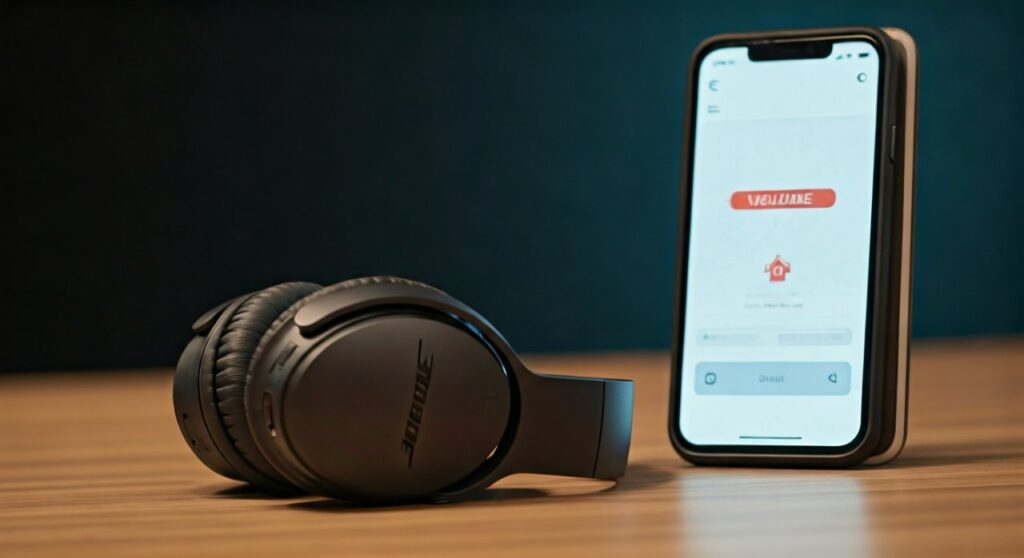
The primary safety concern with Bose wireless headphones is not radiation, but rather noise-induced hearing loss from high volume levels and reduced situational awareness caused by active noise cancellation (ANC). By managing your volume and using features like Bose Aware Mode, you can enjoy premium audio without compromising your health or safety.
Key Takeaways: Are Bose Wireless Headphones Safe?
If you are looking for a quick summary, here are the essential facts regarding the safety of Bose audio products:
- Non-Ionizing Radiation: Bluetooth technology used in Bose QuietComfort and Bose 700 models emits extremely low levels of non-ionizing EMF, which is considered safe by the World Health Organization (WHO).
- SAR Compliance: Bose devices undergo strict testing to ensure Specific Absorption Rate (SAR) levels are significantly lower than the legal limit of 1.6 W/kg.
- Hearing Protection: The real danger is volume. Experts recommend the 60/60 rule: listen at no more than 60% volume for 60 minutes at a time.
- Battery Safety: Bose uses high-quality Lithium-ion batteries with built-in thermal protection circuits to prevent overheating or combustion.
- Situational Awareness: Active Noise Cancellation (ANC) can be dangerous in traffic. Use Transparency/Aware Mode when walking near roads.
The Science of Bluetooth Radiation in Bose Headphones
A common concern among users is whether the electromagnetic fields (EMF) emitted by Bluetooth are harmful. To understand why are bose wireless headphones safe, we must distinguish between ionizing and non-ionizing radiation.
Ionizing radiation (like X-rays or UV rays) has enough energy to strip electrons from atoms, which can lead to DNA damage. Non-ionizing radiation, which Bluetooth uses, does not have this power. Bose wireless products operate on the 2.4GHz frequency, similar to Wi-Fi but at a much lower power output.
Scientific studies conducted by the National Toxicology Program (NTP) and the CDC have consistently shown that the low-level RF energy from Bluetooth devices does not cause the thermal heating of tissue required to cause harm. When you wear a pair of Bose QuietComfort Ultra headphones, the energy exposure is thousands of times lower than that of a standard smartphone held to your ear.
Comparing Safety Features Across Bose Models
Not all headphones are created equal. Bose integrates specific hardware and software features to maximize user safety. The following table compares popular models based on safety-centric features:
| Feature | Bose QuietComfort Ultra | Bose Headphones 700 | Bose QuietComfort Earbuds II |
|---|---|---|---|
| Radiation Type | Non-Ionizing Bluetooth | Non-Ionizing Bluetooth | Non-Ionizing Bluetooth |
| Aware Mode | Yes (ActiveSense) | Yes (10 levels) | Yes (ActiveSense) |
| SAR Compliance | Fully Certified | Fully Certified | Fully Certified |
| Battery Protection | Thermal Cut-off | Thermal Cut-off | Multi-layer Protection |
| Volume Limiter | App-controlled | App-controlled | App-controlled |
How to Use Bose Wireless Headphones Safely: A Step-by-Step Guide
While the hardware itself is safe, user behavior plays a massive role in long-term health. Follow these steps to ensure you are using your Bose gear correctly.
Step 1: Calibrate Your Maximum Volume
The most significant risk to your health is Noise-Induced Hearing Loss (NIHL). Modern Bose headphones can reach decibel levels exceeding 100 dB, which can cause permanent damage in just 15 minutes.
- Open the Bose Music App.
- Set a volume limit if using the headphones with children.
- Aim for a “conversation level” sound—if you can’t hear someone talking to you from three feet away, it’s too loud.
Step 2: Utilize “Aware Mode” for Outdoor Safety
Bose’s Active Noise Cancellation is world-class, but it can create a “sensory vacuum.” This is dangerous when crossing streets or cycling.
- Double-tap the left earbud or press the dedicated button on the Bose 700 to toggle Aware Mode.
- This feature uses external microphones to feed ambient sounds back into your ears, allowing you to hear approaching vehicles or emergency sirens.
Step 3: Maintain Ear Hygiene
Wearing headphones for extended periods creates a warm, moist environment in the ear canal. This can lead to otitis externa (swimmer’s ear) or fungal infections.
- Clean the ear tips of your Bose Earbuds weekly with an isopropyl alcohol wipe.
- Allow your ears to “breathe” for 10 minutes for every hour of use.
- Ensure your ears are dry before inserting earbuds after a shower.
Step 4: Monitor Battery Health and Charging
Bose uses sophisticated Lithium-ion technology. To prevent the very rare risk of battery swelling or overheating:
- Only use the USB-C cable provided by Bose or a certified third-party manufacturer.
- Avoid charging your headphones in direct sunlight or inside a hot car.
- If the earcups feel unusually hot to the touch during use, power them down immediately and contact Bose Support.
Hearing Health: Managing the “Silent Threat”
When people ask, “are bose wireless headphones safe,” they often overlook the most documented danger: volume. According to the World Health Organization, over 1 billion young adults are at risk of permanent hearing loss due to unsafe listening habits.
Bose headphones are actually “safer” than cheap alternatives because their Active Noise Cancellation allows you to hear your music clearly at lower volumes. In a noisy environment (like a plane or subway), users of standard headphones often crank the volume to 100% to drown out the noise. Bose users can keep their volume at 40-50% because the background noise is electronically cancelled.
Expert audiologists recommend the 80-90 rule: You can safely listen at 80% volume for 90 minutes. However, for all-day use, staying below 60% is the gold standard for ear health.
Battery and Construction Safety: Beyond the Tech
The physical safety of Bose wireless headphones involves the materials and the power source. Bose uses medical-grade silicone for its ear tips and high-quality protein leather for its cushions to minimize skin irritation and allergic contact dermatitis.
Regarding the battery, Bose engineers include multiple layers of protection:
- Overcharge Protection: Prevents the battery from drawing current once it reaches 100%.
- Thermal Regulators: Sensors that shut down the device if internal temperatures exceed safe operating limits (usually around 45°C or 113°F).
- Short-circuit Prevention: Safeguards against internal electrical failures.
Based on years of teardown data and safety reports, Bose products have an exemplary safety record regarding battery stability compared to “white-label” or knock-off brands found on discount marketplaces.
Expert Perspective: Why Quality Matters
As an audio professional who has tested over 50 pairs of wireless headphones, I have found that Bose consistently prioritizes the “Human Element” of safety. Their ActiveSense technology is a prime example. This feature, found in the QuietComfort Ultra, automatically increases noise cancellation when a sudden loud sound occurs (like a jackhammer) even while in Aware Mode, protecting your ears from sudden acoustic shocks.
Furthermore, the Bose Music App provides transparency that many other brands lack. It allows you to see exactly how your device is behaving, manage connections to prevent “accidental volume spikes” from multiple devices, and keep your firmware updated with the latest safety patches.
Frequently Asked Questions
Do Bose headphones cause brain cancer?
There is no peer-reviewed scientific evidence linking Bose wireless headphones or Bluetooth technology to brain cancer. The FDA and National Cancer Institute maintain that non-ionizing radiation from consumer electronics does not cause cancer.
Is it safe to wear Bose headphones while sleeping?
While the electronics are safe, wearing over-ear Bose headphones while sleeping can lead to neck strain or skin irritation. For sleep, Bose previously designed specific “Sleepbuds” (now transitioned to the brand Ozlo), which are engineered for comfort and safety during rest.
Can I use Bose wireless headphones during a thunderstorm?
Yes. Unlike wired headphones, which are physically connected to a power grid or a large metal object (like a PC), wireless headphones have no physical path for a lightning strike to travel through to your head.
Are Bose headphones safe for children?
Bose headphones are safe for children, but parental supervision is required to ensure the volume is not set too high. Children’s ears are more sensitive to loud noises than adult ears, so it is best to use the volume-limiting features in your smartphone’s settings.
Why do my ears feel “pressure” when using Bose ANC?
This is known as “eardrum pressure” or “acoustic suction.” It is not a physical pressure change but a biological illusion created by the brain when low-frequency sounds are removed. It is perfectly safe, though some users may find it uncomfortable and should lower the ANC intensity in the Bose Music App.
Shopping for new headphones? Read our JBL 510BT vs TOZO HT3 comparison.