The best riding lawn mower for most homeowners is a gas-powered lawn tractor in the 19-22 HP range with a 42-inch cutting deck, but the right choice depends heavily on your yard size, terrain, and how much maintenance you want to take on. Choosing among today’s options is genuinely difficult: the category now spans traditional gas tractors, battery-electric riding mowers, walk-behind cordless mowers, and fully autonomous robotic units, each with a different set of trade-offs around upfront cost, runtime, slope handling, and long-term upkeep. For a broader look at how these machines rank against one another, see our roundup of the best top-rated residential riding lawn mowers.
This guide evaluates 8 models ranging from $379.99 to $4,399.00, covering brands including Husqvarna, EGO, Worx, MOVA, and Segway. We assessed each product based on engine or motor output, cutting deck size and design, terrain capability, runtime or fuel efficiency, and the practical needs of different yard sizes and buyer profiles. Our goal is to give you a clear, honest framework for making a confident decision without wading through spec sheets on your own.
Quick Answer: Best Riding Lawn Mowers for 2026
Here are our top picks across the most common buyer scenarios, based entirely on verified product specifications and features.
- Best Overall Gas Lawn Tractor: Husqvarna TS 120 (42″) 19HP Briggs Lawn Tractor because it combines a proven Briggs and Stratton 19 HP engine with a 42-inch twin-blade stamped deck and a pedal-operated transmission that keeps both hands on the wheel. The trade-off is that it requires routine engine maintenance that electric alternatives avoid.
- Best Electric Riding Mower: EGO Power+ Electric Riding Lawn Mower TR4204 because its six-battery 56V system delivers up to 20,000 watts of peak power, equivalent to a 21 HP gas engine, and cuts up to 1.5 acres per charge. The trade-off is a higher upfront cost and the need to manage battery charging between sessions.
- Best Robotic Mower for Slopes: MOVA LiDAX Ultra 3000 AWD Robot Lawn Mower because four 116W hub motors and a 360-degree 3D LiDAR system allow it to handle slopes up to 80% and navigate obstacles without perimeter wire. The trade-off is that it covers up to 0.75 acres and requires app-based setup.
- Best Cordless Walk-Behind: Worx Cordless Lawn Mower WG760 because its AeroDeck vented design prevents clogs, and the brushless motor 2.0 delivers 40% more power than the previous generation for lawns up to half an acre. The trade-off is that it is a walk-behind, not a riding mower, so it suits smaller properties only.
Ranked Product Comparison

Pros
- The six included 6.0Ah batteries reduce the need to buy the listed power source separately because the package description says they are included, though recharge time is not stated.
- The stated up-to-1.5-acre range gives property owners a usable planning reference because the manufacturer supplies that figure, though it is not a guarantee for every lawn.
- The 42-inch deck can cover a moderate mowing path because its width is specified, though maneuverability and cut quality are not independently assessed.
- Three drive speeds, cruise control, and three blade settings allow adjustment because those controls are listed, though their practical differences are not explained.
- LED lights, a USB port, Bluetooth, and a five-year tool warranty are included in the description, though warranty terms and feature limitations are not provided.
Cons
- The stated 1.5-acre coverage is an up-to claim, and no recharge time or replacement-battery cost is supplied.
- The listing does not provide towing capacity, mower weight, dimensions, slope guidance, or storage requirements.
- The 20,000-watt and 21-horsepower-equivalent figures are manufacturer comparisons, not independent performance measurements.
EGO Power+ Electric Riding Lawn Mower TR4204 is a strong candidate for owners with lawns up to the stated 1.5-acre range who want cordless riding convenience, because it includes six 6.0Ah batteries, a 42-inch deck, and adjustable drive and blade controls, though the listing does not provide recharge time or performance results in varied conditions. The main question is whether the claimed range matches the buyer’s property and mowing routine.
The TR4204 is positioned as a battery-powered alternative to a conventional riding tractor. EGO Power+ Electric Riding Lawn Mower TR4204 uses up to six EGO 56V ARC Lithium batteries because the product description identifies that platform and battery count, though the stated 20,000-watt output and 21-horsepower equivalence are manufacturer claims rather than independent benchmarks. Compatibility with all EGO 56V ARC Lithium batteries may also appeal to existing platform owners, though the included configuration remains six 6.0Ah batteries.
Its cutting equipment is clearly specified. The 42-inch stamped-steel deck and dual brushless cutting motors are intended to support mowing with no belts because those features are listed, though durability and cut performance have not been independently tested. Twelve height positions from 1.5 to 4.5 inches give buyers a broad adjustment range because the listing states those settings, though the method of adjustment is not explained.
Controls and convenience features broaden its appeal. The digital LCD includes three blade settings, three drive speeds, and cruise control because those controls are supplied, while LED lights, Bluetooth, and a USB charging port are also listed, though the description does not explain app functions, charging behavior, or nighttime-use limitations. A rear tow hitch is provided for moving loads, though towing capacity and approved loads are not documented.
EGO Power+ Electric Riding Lawn Mower TR4204 merits a qualified recommendation for buyers whose lawn size, terrain, storage, and charging arrangements fit the available information. The five-year tool warranty is stated by the manufacturer, though its terms are not supplied. Before purchase, confirm coverage for your property, battery recharge time, deck clearance, slope requirements, mower dimensions, storage space, and towing needs.
Strong Match: EGO Power+ Electric Riding Lawn Mower TR4204 suits property owners wanting a cordless tractor for up to the stated 1.5-acre range because six included 6.0Ah batteries and a 42-inch deck are specified, though actual coverage depends on operating conditions.
Also Consider It If: Existing EGO 56V ARC Lithium users may value platform compatibility because the listing says the mower works with all batteries in that platform, though the supplied description does not explain battery interchange limits or charging logistics.
Not the Best Fit: Buyers with larger properties, unknown charging access, steep terrain, or substantial towing requirements should wait for more information or consider another format because recharge time, slope guidance, and towing capacity are not supplied.
Decision in One Sentence: EGO Power+ Electric Riding Lawn Mower TR4204 is best for owners of moderate-size properties who can accept an up-to-1.5-acre claim and verify the mower’s physical and operating requirements.
Consider It For:
- Six included 6.0Ah batteries and cordless operation.
- A stated mowing range of up to 1.5 acres.
- A 42-inch stamped-steel deck with dual brushless motors.
- Three blade settings, three drive speeds, cruise control, and twelve cutting heights.
- LED lights, Bluetooth, USB charging, and a rear tow hitch.
Pass If:
- Your property exceeds the stated coverage or you cannot plan around recharging.
- You need documented towing capacity, slope guidance, or mower dimensions.
- You require independently verified power or durability comparisons.
EGO Power+ Electric Riding Lawn Mower TR4204 offers the clearest value to moderate-property owners because its listed controls and battery package target cordless convenience, though the product data does not establish real-world range in every condition.
The mower combines up to six EGO 56V ARC Lithium batteries and includes six 6.0Ah batteries because the listing specifies both, while the 42-inch deck and dual brushless motors provide the stated cutting hardware, though no independent performance testing is available.
Cutting flexibility comes from twelve height positions between 1.5 and 4.5 inches, and driving flexibility comes from three speeds and cruise control because those functions are listed, though operating instructions are not supplied.
LED lights, Bluetooth, a USB port, and a rear tow hitch add utility because they are identified features, though Bluetooth capabilities, lighting limits, and towing capacity remain unspecified.

Pros
- Wire-free setup could appeal to buyers who want to avoid burying perimeter cable because the product uses virtual boundaries, though the supplied data does not establish how much manual mapping is required.
- RTK plus Vision is positioned for complex layouts because the description specifically mentions trees and narrow corridors, though local signal conditions and garden obstructions may affect results.
- Automatic recharging could reduce routine intervention because the description says the mower intelligently recharges and resumes mowing, though battery capacity and charging time are missing.
- Multi-zone app management may help owners with separated lawn areas because up to 12 zones, schedules, and mowing directions are listed, though software reliability is unverified.
- A listed 58 dB(A) operating figure may suit noise-sensitive buyers because that value appears in the title, though the measurement method and real-world sound level are not supplied.
Cons
- Core mowing performance remains uncertain because no independent test results, cutting-width data, slope rating, or grass-height limits are supplied.
- Obstacle avoidance should not be treated as guaranteed because the 150-plus-object recognition claim comes from product materials and has no supporting test evidence.
- Ownership fit is difficult to assess because dimensions, battery details, weather resistance, replacement-part availability, app compatibility, and verified warranty terms are not provided.
Segway Navimow i105N appears best suited to buyers who prioritize wire-free installation and app-based control because the supplied product description lists virtual boundaries, AI-assisted mapping, and multi-zone management, though the absence of independent tests and customer excerpts limits confidence in real-world results. The product data identifies a 1/8-acre positioning in the title, but it does not provide a complete capacity specification or explain how terrain affects coverage.
Navigation is the central proposition because Segway describes RTK plus Vision positioning for tree-covered lawns and narrow corridors, which could matter more than basic GPS on complicated properties, though signal behavior, correction requirements, and performance under dense cover are not independently established. The description also says the mower follows planned patterns, changes direction after full coverage, and recharges automatically, which could reduce hands-on scheduling, though battery capacity, charge duration, slope handling, and mowing speed are unknown.
Obstacle handling may be useful because the supplied claim describes a 140-degree camera and recognition of more than 150 object types, though that figure is a manufacturer claim rather than a demonstrated success rate. App features could benefit owners with divided lawns because the description lists map editing, schedules, mowing directions, remote control, and up to 12 zones, though supported phones, connectivity requirements, subscription conditions, and software reliability are not stated.
No customer review excerpts were supplied, so there is no usable customer pattern for noise, mapping, reliability, lawn finish, or support. Buyers should therefore compare this model with a wired mower or a better-documented robotic mower when predictable boundary behavior, published specifications, or proven long-term ownership matter more than installation convenience. A cautious verdict is that Segway Navimow i105N merits consideration for a suitable, relatively manageable lawn, but the evidence does not justify a universal recommendation.
Verified Product Facts: Segway Navimow i105N is described as a perimeter-wire-free robotic lawn mower because the supplied listing specifies virtual boundaries and smartphone mapping, though setup effort and mapping accuracy are not independently confirmed. The listing also names RTK plus Vision positioning, AI-assisted mapping, planned mowing, automatic recharging, app control, multi-zone management for up to 12 zones, a 140-degree camera, and a 58 dB(A) figure in the title, though measurement conditions and field performance are not supplied.
Customer Signals: The supplied material contains no customer review excerpts, so it cannot establish recurring themes about navigation, cutting quality, noise, durability, app behavior, or service. Any listed aggregate rating should therefore be treated as insufficient evidence of a pattern because the underlying comments and review context are unavailable.
Not Verified: Long-term durability is not established because no ownership history is supplied. Battery capacity, runtime, charging time, cutting width, cutting height, slope capability, weather resistance, physical dimensions, and lawn-size limits beyond the title are not provided. Compatibility with phones and local conditions is also unknown, as are replacement-part availability, subscription requirements, and independently verified warranty terms.
Evidence-Aware Verdict: The evidence supports considering Segway Navimow i105N for buyers who value wire-free mapping and app controls because those features are explicitly listed, though it cannot support confident conclusions about reliability, navigation accuracy, cutting performance, or total ownership cost.
Coverage: Segway Navimow i105N is presented as a 1/8-acre mower because that capacity appears in the title, which may suit a smaller lawn, though the supplied data does not define maximum practical area, mowing time, slope limits, or how divided sections affect coverage.
Compatibility: RTK plus Vision is described for trees and narrow corridors because the product materials specifically mention those conditions, which could help buyers with complex layouts, though satellite visibility, correction setup, regional availability, and property-specific performance remain unknown.
Controls: The Navimow app is listed with map editing, schedules, mowing directions, remote control, and up to 12 zones because those functions appear in the supplied description, though phone compatibility, connectivity needs, account requirements, and software stability are not documented.
Setup: Wire-free mapping may reduce physical installation work because the mower uses smartphone-guided virtual boundaries and AI-assisted mapping, though the claim that setup is quick does not establish how much boundary correction or manual review a particular lawn will require.
Maintenance: Automatic recharging and supplied spare blades may reduce some routine interruptions because both are listed in the package or feature information, though blade-change intervals, cleaning needs, battery replacement, and service access are not supplied.
Noise and ownership: The title gives a 58 dB(A) figure because that value is included in the product name, which may interest noise-sensitive buyers, though test conditions, weather protection, included connectivity, recurring fees, and verified warranty coverage should be confirmed before purchase.
Unverified Claims:
- RTK plus Vision provides stable centimetre-level positioning in every listed garden condition because this is a manufacturer description, though no independent navigation test is supplied.
- AI-assisted mapping automatically identifies clear lawn edges because the listing makes that claim, though mapping accuracy and correction effort are unknown.
- The camera identifies more than 150 object types and provides stronger obstacle avoidance because this is a product claim, though no detection or safety testing is provided.
- Planned mowing, automatic recharging, and reduced lawn tracks deliver consistently efficient maintenance because those benefits are described by the manufacturer, though no measured coverage or lawn-finish results are available.
Missing Specifications:
- Battery capacity, runtime, charging duration, cutting width, cutting-height range, slope rating, and practical lawn capacity are not supplied, though they directly affect whether the mower fits a property.
- Physical dimensions, weight, weather-resistance details, operating-temperature range, and required clearance are not supplied, though they affect storage, access, and outdoor suitability.
- Phone compatibility, connectivity requirements, RTK correction details, subscription terms, replacement-part availability, and verified warranty conditions are not supplied, though they affect setup and ownership cost.
Customer Signal Limitations:
- No customer review excerpts are supplied, so the available material is insufficient to identify reliable patterns about performance, noise, durability, mapping, app quality, or support.
What to Verify Before Buying: Confirm the mower's tested coverage, slope, battery, weather-resistance, and connectivity requirements for your specific lawn before purchase.

Pros
- Includes two batteries, a dual charger, collection bag, mulch plug, and discharge chute.
- Brushless motor is claimed to provide more power and longer runtime than the prior generation.
- Seven cutting-height positions cover a 1.5- to 4-inch range.
- Vented deck design is intended to reduce clogs and improve bag collection.
- Batteries can also operate other products in the WORX PowerShare platform.
Cons
- Cordless runtime remains limited by battery charge and lawn conditions, affecting owners who need to mow larger areas continuously.
- The mower is positioned for lawns up to one-half acre, so buyers with larger properties may need additional batteries or a different mower type.
- As a push mower, it provides no self-propelled assistance in the supplied data, which may matter on sloped or difficult terrain.
Worx WG752 is aimed at homeowners with lawns up to one-half acre who want cordless mowing without giving up mulching, bagging, or side discharge. The included pair of 20V 5.0Ah batteries forms its 40V power source and makes the package more usable immediately, though mowing time still depends on grass density and battery charge.
Its 21-inch deck offers a practical balance between coverage and residential maneuverability. The supplied description says the vented deck is designed to improve airflow, reduce clumping, and support bag collection. IntelliCut sensors are intended to raise cutting speed in thick grass and lower it in lighter areas, but these are supplied performance claims rather than independently verified results.
Daily adjustment is relatively straightforward on paper. A single seven-position lever changes cutting height from 1.5 to 4 inches, while an onboard indicator helps track remaining charge. The handle collapses for vertical storage, which can help households with limited garage space. The package includes the mower, two batteries, a dual charger, bag, mulch plug, and discharge chute.
The main compromise is the battery system. Although the mower is described as suitable for up to one-half acre, runtime varies with conditions and the supplied data does not provide a measured mowing duration. Buyers outside the PowerShare ecosystem may have less reason to value cross-tool battery compatibility, while owners of steep lawns should note that this is identified as a push mower.
WG752 makes the most sense for a homeowner seeking a complete cordless kit with multiple discharge choices and compact storage. The main reason to hesitate is dependence on charged batteries for every mowing session. Consider a different mower type if you maintain more than one-half acre, need self-propulsion, or prefer uninterrupted operation without recharge planning.
AeroDeck Venting: The vented cutting deck is intended to improve airflow around the blade, which may help limit clogging and clumps while supporting bag collection. That matters most to homeowners who switch between bagging and mulching or frequently mow thicker grass, though the supplied information does not independently confirm the degree of improvement.
IntelliCut Sensors: Automatic speed adjustment is designed to increase cutting power in dense grass and reduce demand in lighter growth. This can make battery use more responsive than a constant-speed approach, benefiting yards with changing conditions. Buyers should still expect actual runtime to vary with grass height, moisture, terrain, and mowing pace.
PowerShare Battery System: The mower uses two 20V 5.0Ah PowerShare Pro batteries together and can share them with more than 140 WORX platform products, according to the supplied data. That creates value for existing PowerShare owners, while first-time buyers should weigh the benefit of joining that battery ecosystem.
Three Cutting Modes: Mulching, bagging, and rear side discharge let owners choose whether clippings remain on the lawn, collect in the included bag, or exit to the side. This flexibility suits varied mowing preferences, though changing modes requires the included mulch plug or discharge chute and does not eliminate the need to manage clippings.
Seven-Position Height Lever: A single lever sets the cutting height from 1.5 to 4 inches across seven positions. The broad adjustment range lets homeowners change the cut for different lawn conditions without making separate wheel adjustments, although the supplied data does not specify the lever's exact location or adjustment effort.
Setup: Worx WG752 is suited to buyers who want a cordless mower package with the core accessories included, because the box lists two batteries, a dual charger, a bag, a mulch plug, and a side-discharge chute. The supplied data does not provide assembly instructions, so buyers should follow the included product documentation rather than assume every setup step.
Cutting Configuration: The mower supports mulching, bagging, and rear side discharge. The mulch plug and chute are included, allowing owners to select a disposal method for the task. Bagging may be useful when clippings should be collected, while mulching or discharge avoids emptying the bag, though results depend on grass conditions.
Height Adjustment: A seven-position single lever changes the cutting height from 1.5 to 4 inches. This simplifies choosing a preferred cut compared with making separate adjustments at each wheel, though the correct height for a particular lawn is not specified by the product data.
Storage and Runtime: The collapsible handle supports vertical, space-saving storage, and the onboard charge indicator helps owners decide whether the batteries are ready for the next session. Runtime is not stated as a fixed number, so larger or dense lawns may require charging plans or additional compatible batteries.

Pros
- Included batteries and dual charger create a stated ready-to-use package, though charging time and runtime are not provided.
- Self-propelled operation with variable speed may suit buyers who want less manual pushing, though slope and surface behavior remain unknown.
- Three cutting modes allow buyers to choose between mulching, bagging, and side discharge, though switching convenience is not tested.
- A 21-inch cutting width may reduce passes compared with narrower mowers, though maneuverability and cut quality are not independently assessed.
- The PowerShare platform is stated to cover more than 140 products, which may add value for existing Worx owners, though compatibility across those products is not verified here.
Cons
- The stated 1/2-acre suitability is a manufacturer claim and depends on grass, terrain, mowing height, and battery condition.
- No runtime, recharge-time, deck material, mower weight, noise, or warranty specifications are supplied.
- No top reviews are supplied, so the 4.6 rating cannot establish a customer pattern.
Worx WG760 is best suited to a buyer seeking a cordless, self-propelled mower for a lawn up to the stated 1/2 acre because the supplied package includes a 40V 21-inch mower, two 20V 5.0Ah PowerShare Pro batteries, and a 4A dual charger. The key limitation is that actual runtime and cutting performance are not independently verified. Lawn size alone therefore cannot guarantee completion on one charge.
The mower is described with self-propulsion and variable speed up to 3.7 MPH. That combination may help buyers who want to guide rather than fully push the machine, though the data does not describe performance on slopes, wet grass, uneven ground, or tight turns. IntelliCut sensors are claimed to raise cutting speed in thick grass and reduce it in lighter areas, though no independent testing establishes how consistently that behavior works.
Three mowing modes are included: mulching, bagging, and rear side discharge. The supplied mulch plug, discharge chute, and collection bag make the configuration options clear, though collection capacity, clog resistance, and cut quality are not measured. The stated 1.5-inch to 4-inch range uses a single seven-position lever, which may simplify height changes, though the exact increments and adjustment effort are not given.
A collapsible handle and charge-level indicator address storage and battery monitoring, while the PowerShare claim may appeal to existing Worx owners. However, battery lifespan, charging time, mower weight, deck material, noise, and maintenance requirements are absent. The 4.6 rating is not a review pattern because no excerpts are supplied. The evidence supports the WG760 for buyers who value cordless convenience and already have suitable space and charging access, provided the runtime and lawn conditions are acceptable.
Verified Product Facts: Worx WG760 is listed as a 40V, 21-inch, self-propelled cordless mower with variable speed up to 3.7 MPH. The package includes two 20V 5.0Ah batteries, a 4A dual charger, collection bag, rear side-discharge chute, and mulch plug. The stated cutting-height range is 1.5 to 4 inches with seven positions, though performance is not independently tested.
Customer Signals: No review excerpts are supplied. The displayed rating cannot establish recurring customer themes about runtime, cut quality, propulsion, noise, or reliability.
Not Verified: Actual runtime, charge time, battery life, cutting performance, bag capacity, clog resistance, mower weight, noise, deck material, slope handling, maintenance needs, and warranty are not established.
Evidence-Aware Verdict: The evidence supports considering Worx WG760 for a buyer seeking the stated features and a lawn no larger than the claimed 1/2 acre. It cannot confirm that the included batteries will cover every mowing session or that IntelliCut and AeroDeck claims deliver their stated benefits.
Coverage: Worx WG760 is described for lawns up to 1/2 acre, which gives a starting point for buyer fit, though grass density, terrain, mowing frequency, and battery condition affect actual coverage.
Power: The package includes two 20V 5.0Ah batteries used as a 40V system, which avoids a separate battery purchase in the listed package, though runtime and charging time are unknown.
Propulsion: Variable self-propulsion reaches a stated 3.7 MPH, which may reduce pushing effort, though slope control, traction, and speed adjustment are not independently assessed.
Cutting: The 21-inch deck and three modes support flexible mowing, though deck construction, cut quality, bag capacity, and clog behavior are not verified.
Storage: The handle collapses for vertical storage, which may help buyers with limited space, though folded dimensions and required storage conditions are not supplied.
Unverified Claims:
- The 1/2-acre suitability, 40% power increase, and 10% longer runtime claims are not independently confirmed.
- AeroDeck clog reduction, IntelliCut response, bagging improvement, and PowerShare compatibility claims are not supported by supplied testing.
Missing Specifications:
- Actual runtime, charge time, battery longevity, mower weight, deck material, bag capacity, noise, and warranty are not supplied.
- Terrain limits and maintenance requirements are not stated.
Customer Signal Limitations:
- No top reviews or review excerpts are supplied, so the displayed rating cannot support a pattern about ownership or performance.
What to Verify Before Buying: Confirm expected runtime for the lawn's grass and terrain, along with battery charging requirements and warranty terms.

Pros
- The 46-inch deck benefits property owners who want broad lawn coverage per pass.
- Hydrostatic transmission benefits users who prefer the listed transmission design for forward and reverse travel.
- The 5 mph forward speed benefits buyers who want the stated travel capability for mowing work.
- The 2 mph reverse speed benefits users who need a documented reverse specification.
- The 22HP Briggs EXi engine benefits buyers seeking the supplied lawn-tractor power configuration.
Cons
- The 3-gallon fuel tank may affect buyers seeking longer documented runtime because fuel economy is not supplied.
- The stamped two-blade deck affects buyers who prefer another deck construction or blade configuration.
- Missing dimensions, cutting controls, and maintenance information affect buyers planning storage and upkeep in detail.
Husqvarna TS 146 (46″) 22HP Briggs Lawn Tractor 960430346 suits property owners seeking a conventional lawn tractor with a broad cutting deck because it combines a 22HP Briggs EXi series engine, 46-inch deck, and hydrostatic transmission, though the supplied data does not describe property-size recommendations or included attachments.
The 46-inch stamped two-blade deck can cover a broad path during mowing because its cutting width is stated as 46 inches, though cutting-height settings and discharge configuration are not provided. The 22HP Briggs EXi series engine supplies the listed power specification, though the product data does not establish fuel economy, sound level, or expected workload.
The K46 Tuff Torq hydrostatic transmission is paired with a stated 5 mph forward speed and 2 mph reverse speed, giving buyers documented movement specifications, though control layout and turning details are not supplied. The 3-gallon fuel capacity identifies the tank size, though it cannot establish runtime without fuel-consumption information. Dimensions and storage requirements are also missing.
The Husqvarna TS 146 is a sensible option for buyers who want the supplied lawn-tractor layout and 46-inch deck because its engine, transmission, speed, and fuel specifications are clearly identified, though the record omits several ownership details. Buyers who need a zero-turn format, attachments, or complete maintenance specifications should consider a different mower type or a more fully documented model.
Best For: Property owners seeking a lawn tractor with a 46-inch cutting deck.
Why It Fits: The Husqvarna TS 146 lists a 22HP Briggs EXi engine, hydrostatic transmission, 5 mph forward speed, and 2 mph reverse speed, though runtime is not supplied.
Think Twice If: You need zero-turn maneuverability, documented attachments, or complete storage dimensions because the supplied data does not describe those features.
Bottom Line: Choose the Husqvarna TS 146 for its documented tractor configuration if the limited operating detail is acceptable.
Buy It If: You need a lawn tractor and a 46-inch stamped deck with hydrostatic drive matters to you.
Skip It If: You need zero-turn operation or specifications about attachments that this product record does not provide.
Engine: The Husqvarna TS 146 uses a 22HP Briggs EXi series engine because that configuration is listed, though fuel consumption is not specified.
Deck: The 46-inch stamped two-blade deck supports a wide cutting path because its width is stated, though cutting-height adjustment is not described.
Transmission: The K46 Tuff Torq hydrostatic transmission provides the documented drive system because it is named in the product data, though controls are not detailed.
Speed: The mower is listed at 5 mph forward and 2 mph reverse because both ground speeds are supplied, though maneuvering performance is not characterized.
Fuel: The 3-gallon tank establishes the listed fuel capacity because that figure is supplied, though expected mowing time cannot be calculated.
Pros
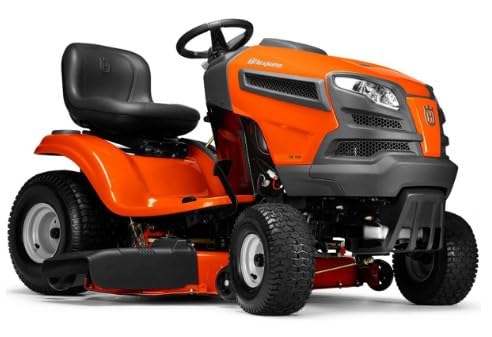
- Owners seeking a riding mower get a 19 HP Briggs & Stratton 540cc engine specification, though real-world power under load is unverified.
- People who value steering control may appreciate the pedal-operated transmission because both hands remain on the wheel, though operation details are missing.
- A 42-inch deck can make each pass cover a substantial strip, though actual cutting efficiency depends on the property and conditions.
- The twin-blade deck is a practical configuration for routine mowing, though blade access and replacement information are not supplied.
- The tractor format can reduce the need to walk behind the mower, though seat comfort, turning radius, and terrain suitability are unknown.
Cons
- The product data does not provide tractor dimensions, turning clearance, or storage requirements.
- Maintenance instructions, fuel requirements, cleaning access, and replacement-part details are not supplied.
- No customer review excerpts are available to confirm comfort, cut quality, reliability, or ease of ownership.
Husqvarna TS 120 (42″) 19HP Briggs Lawn Tractor 970846301 is aimed at property owners who want a riding mower for routine lawn cutting, because it combines a specified 19 HP Briggs & Stratton 540cc engine with a 42-inch twin-blade stamped deck. The pedal-operated transmission is the clearest convenience because it is described as keeping both hands on the wheel, though the supplied information does not establish how the tractor fits a particular yard.
The engine specification gives buyers a concrete starting point for comparing this tractor with other riding mowers, though horsepower alone does not prove performance on slopes, tall grass, wet grass, or uneven ground. The 42-inch deck defines the cutting width, which may help owners plan mowing passes, though no dimensions, turning radius, deck-height range, or terrain guidance is provided.
Routine ownership still has important unanswered questions. The data does not state how the deck should be cleaned, which fuel or other consumables are required, how often maintenance is due, or which replacement blades and service parts fit. Storage also cannot be assessed because tractor footprint, recommended shelter, and clearance requirements are missing.
No review excerpts are supplied, so the 4.5 rating is a listed signal rather than independent evidence about comfort, cut quality, noise, durability, or ease of servicing. Buyers should verify overall dimensions, turning clearance, terrain limits, operating instructions, maintenance intervals, cleaning access, fuel requirements, included equipment, and replacement-part availability before purchase.
Buyers with a lawn suited to a riding tractor should consider the Husqvarna TS 120 because the engine, deck, and pedal transmission are clearly identified, though fit remains property-specific. Buyers with limited storage, tight gates, steep terrain, or a need for detailed service information should avoid committing until those specifications are confirmed.
Best Ownership Fit: Husqvarna TS 120 (42″) 19HP Briggs Lawn Tractor 970846301 suits owners seeking a riding mower for recurring lawn work, because it has a 42-inch deck and 19 HP engine specification, though yard size, terrain, and storage space are not supplied.
Daily Workflow: The listed pedal-operated transmission is intended to let the operator keep both hands on the wheel, because that is the stated control benefit, though starting, shifting, mowing, and stopping procedures should be verified in the manual.
Likely Friction: The main ownership friction is missing practical information, because deck cleaning, fuel, maintenance, dimensions, and replacement parts are not described, though the product data does identify the engine and deck.
Before You Buy: Verify tractor dimensions and gate clearance, turning radius and terrain limits, required fuel and maintenance schedule, and compatible blades or service parts, because none of these details are supplied.
This Is NOT For: The Husqvarna TS 120 is not a confirmed fit for owners with a narrow storage area or restrictive gate access, because its footprint is unspecified. It is also not a confirmed choice for steep or uneven properties, because terrain capability is not stated.
Setup: Husqvarna TS 120 (42″) 19HP Briggs Lawn Tractor 970846301 requires setup information that is not supplied, though the product data identifies a Briggs & Stratton 19 HP 540cc engine, pedal-operated transmission, and 42-inch deck. Verify assembly, controls, fluids, and initial operating checks with the manufacturer.
Controls: The pedal-operated transmission is described as allowing both hands to remain on the wheel, though the supplied data does not explain pedal functions, speed selection, braking, or safety interlocks. Consult the operating manual before use.
Cleaning: The deck is identified as a stamped twin-blade mower deck, though no deck-washing method, access points, or cleaning frequency is provided. Confirm approved cleaning procedures before establishing a routine.
Maintenance and Storage: Fuel type, service intervals, oil specifications, battery details, storage clearances, and replacement blades are not supplied. Verify these items, along with part availability, with Husqvarna or an authorized service source.

Pros
- AWD traction and suspension target steep or uneven lawns that may challenge simpler robotic mowers.
- Automatic mapping removes the installation work associated with perimeter-wire systems.
- The 1.2- to 3.9-inch cutting-height range accommodates different grass preferences.
- 4G tracking, theft alerts, and PIN unlocking add security features for outdoor equipment.
- The supplied data includes a three-year warranty and three years of free 4G connectivity.
Cons
- The stated up-to-0.25-acre-per-charge figure may require multiple cycles for larger lawns up to the advertised 0.75-acre capacity.
- A premium feature set and connected 4G/app operation may be excessive for small, flat lawns.
- The data does not specify runtime, noise, weather protection, charging-station needs, or replacement-blade costs.
MOVA LiDAX Ultra 3000 AWD Robot Lawn Mower is aimed at homeowners with steep, uneven, or complicated lawns who want wire-free automated maintenance. Its all-wheel drive, LiDAR mapping, and AI vision address terrain and navigation challenges, though buyers should distinguish the advertised 0.75-acre property capacity from the stated 0.25-acre-per-charge figure.
Four 116W hub motors and a suspension system are designed to maintain traction on slopes up to 80 percent and around obstacles up to 2.4 inches. Floating cutting discs are intended to follow uneven ground, while the 15.8-inch dual-disc cutting system uses 12 blades. These are useful design choices for demanding terrain, although the supplied description represents manufacturer testing claims.
Setup is wire-free and RTK-free: the mower uses 360-degree 3D LiDAR and AI dual vision to create maps automatically. The app supports two maps, multiple mowing zones, schedules, mowing modes, cutting height from 1.2 to 3.9 inches, and customized management. Three years of included 4G is described for location tracking and theft alerts, while a PIN is required to unlock the mower.
Capacity is the key trade-off. Although the model is promoted for areas up to 0.75 acre, the supplied data says it covers up to 0.25 acre per charge, so a larger property may require automatic recharging and multiple mowing cycles. Noise, weather rating, charging-station placement, runtime, and blade replacement details are not supplied. A simpler mower may be preferable for small, level lawns.
The strongest reason to buy the MOVA LiDAX Ultra 3000 AWD Robot Lawn Mower is its combination of all-terrain hardware, wire-free mapping, edge control, and security monitoring. The main reason to hesitate is the unclear relationship between total yard capacity and per-charge coverage. Choose another product type if your lawn is flat and small, or if you need fully documented operating and maintenance specifications.
Complex Terrain: MOVA LiDAX Ultra 3000 AWD Robot Lawn Mower is positioned for demanding lawns because four hub motors, suspension, and floating cutting discs are designed to manage slopes, obstacles, and uneven ground. The stated slope capability is a manufacturer claim, so buyers with unusual terrain should verify suitability before relying on it.
Large-Lawn Workflow: The mower is described for properties up to 0.75 acre, while its stated coverage per charge is up to 0.25 acre. Automatic recharging and scheduled mowing may bridge that difference over repeated cycles, though the data does not state how long a full maintenance cycle takes.
Edge Maintenance: Edge-Riding and UltraTrim 2.0 are intended to leave approximately 1.2 inches of uncut grass at borders. This can reduce manual trimming along lawn edges, though boundary shape and surface transitions may affect the result.
Grass and Cutting: The dual-disc system, 12 blades, and adjustable 1.2- to 3.9-inch height range support different grass types and mowing preferences. The listing does not provide independently verified results for thick or wet grass, so local conditions remain an important qualification.
MOVA LiDAX Ultra 3000 AWD Robot Lawn Mower Real Limitations:
- Per-charge coverage: The listing states up to 0.25 acre per charge despite a headline capacity of up to 0.75 acre, affecting owners who expect one-cycle coverage of a larger property.
- Premium complexity: AWD, dual maps, AI vision, 4G, and app controls may be unnecessary for owners of small, flat lawns.
- Missing care details: Noise, weather protection, charging requirements, runtime, and blade costs are not supplied, affecting buyers planning long-term outdoor use.
Before You Buy, Verify These:
- Confirm whether your full lawn size and layout are supported when multiple charging cycles are required.
- Confirm the mower's weather and wet-grass operating requirements if it will remain outdoors.
- Confirm what happens to 4G service and related features after the included three-year period if connectivity is essential.
Still the Right Pick If: MOVA LiDAX Ultra 3000 AWD Robot Lawn Mower remains a strong candidate for owners who need traction and wire-free navigation on complex terrain and accept multi-cycle mowing.

Pros
- Automated mowing may suit owners who want less routine pushing because the M5 is described as self-charging and path-planning, though actual autonomy depends on site conditions and setup.
- No perimeter wire may reduce boundary-installation work because the product uses virtual mapping, though RTK and vision coverage requirements need confirmation.
- Multi-zone control helps properties with separate lawn areas because the app supports up to 20 zones, though transitions and access between areas are not detailed.
- The listed 45% gradient capability may suit sloped residential yards because the manufacturer states that limit, though the claim is not independently tested.
- Quiet operation is specified at no more than 58 dB because the description provides that figure, though real-world sound can vary by surface and mowing conditions.
Cons
- The RTK station and charging base add placement and setup requirements, but required clearances, connectivity, and signal conditions are not supplied.
- The listing does not explain cleaning, weather exposure, blade replacement intervals, battery replacement, or long-term service support.
- The claimed 0.15-acre maximum and 45% slope capability may not translate to every yard layout because terrain, obstacles, and mapping conditions are not independently verified.
ANTHBOT M5 Robot Lawn Mower is intended for owners of small to medium residential yards who want automated cutting with app oversight rather than repeated pushing. Its strongest convenience is the combination of wire-free mapping, self-charging, and automatic resume because those functions are stated in the listing, though reliable operation depends on RTK, vision, property layout, and setup conditions that are not fully described.
The M5 is listed for a maximum mowing area of 0.15 acre and supports up to 20 work zones through the ANTHBOT app. That arrangement could help a property owner manage separated lawn areas because the app can create zones, paths, and no-go areas, though the data does not explain how the mower crosses between areas or what phone, network, or account requirements apply. The virtual map is described as creating itself in about 10 minutes, but that is a manufacturer claim rather than an independently observed setup result.
Cutting height adjusts from 1.2 to 2.7 inches, and five free-rotating blades are listed. Those features give owners a stated range for lawn-height preferences because the product description supplies them, though the adjustment method, blade-access procedure, and suitable grass conditions are not provided. The mower is also claimed to handle slopes up to 45% and recognize more than 1,000 obstacle types with dual cameras, but buyers should treat those capabilities as claims requiring site-specific verification.
The package includes the mower, charging base, five-blade set, and RTK reference station, with items shipped in separate packages. That supports a defined initial setup, though placement clearances and connectivity are unknown. Cleaning, weather protection, battery replacement, blade schedule, dimensions, and service support are also missing. Buy after confirming yard coverage and installation requirements; avoid it for properties beyond 0.15 acre or with layouts the manufacturer cannot confirm as compatible.
Best Ownership Fit: ANTHBOT M5 Robot Lawn Mower best fits owners of residential yards up to the listed 0.15-acre maximum who want app-managed, automated mowing because it supports multi-zone mapping and self-charging, though actual fit depends on signal and terrain conditions.
Daily Workflow: The expected routine is to manage mowing through the app while the M5 plans paths, returns to its charging base, and resumes work because those functions are described, though monitoring, connectivity, and intervention requirements are not specified.
Likely Friction: Installing and positioning both the charging base and RTK reference station may be the main setup burden because both are included, though required clearances, signal coverage, and weather protection are not supplied.
Before You Buy: Confirm the 0.15-acre coverage for your exact layout, RTK and app connectivity requirements, charging-base placement space, slope interpretation, and availability of blades, batteries, cleaning guidance, and service support.
This Is NOT For: This mower is not a clear fit for properties larger than 0.15 acre or owners unwilling to manage app, mapping, and reference-station setup because the stated coverage and system requirements impose boundaries, though site compatibility must be confirmed.
Setup: ANTHBOT M5 Robot Lawn Mower is presented as a wire-free setup because it creates a virtual map in the app, though the charging base and RTK reference station still require placement and the supplied data does not provide installation instructions or clearances.
App and Mapping: The app can manage up to 20 work zones, selectable mowing paths, and no-go zones because those controls are listed, though phone compatibility, account requirements, network access, and mapping corrections are not explained.
Charging: The M5 is described as returning to its charging base and resuming automatically because self-charging is a listed feature, though base power requirements, cable length, weather exposure, and placement guidance should be verified.
Blades and Cleaning: A five-blade set is included because the package contents specify five blades, though replacement intervals, safe blade access, debris removal, and cleaning instructions are not supplied.
Updates and Storage: OTA wireless updates are supported because the description identifies that function, though battery replacement, winter storage, water-resistance guidance, and long-term service support should be confirmed with the manufacturer.
How We Evaluated These Riding Lawn Mowers
Our recommendations are based on verified manufacturer specifications, documented feature sets, and publicly available customer-review signals. We did not conduct independent hands-on testing of these specific units. Where customer feedback patterns are referenced, they reflect signals present in the verified product data supplied for this guide. Manufacturer-supplied claims, such as horsepower ratings, runtime figures, and slope percentages, are reported as stated and not independently verified.
We evaluated each model across six criteria. Engine or motor output determines whether a mower can handle thick, damp, or overgrown grass without bogging down. Cutting deck size and design directly affects how many passes you need and the quality of the finished cut. Terrain capability, including slope rating and suspension design, matters for anyone with a hilly or uneven yard. Runtime or fuel efficiency sets a practical ceiling on how much ground you can cover in a single session. Ease of use, including transmission type, controls, and setup requirements, separates machines suited to occasional homeowners from those built for frequent use. Finally, maintenance burden, whether that means oil changes and belt replacements or simply charging batteries, shapes the true long-term cost of ownership beyond the purchase price.
Which Option Fits You?
| Buyer or use case | Recommended product | Key reason | Main trade-off |
|---|---|---|---|
| Homeowner with 1 to 2 acres wanting a reliable gas tractor | Husqvarna TS 120 (42″) 19HP Briggs Lawn Tractor | 19 HP Briggs and Stratton engine with pedal-operated transmission for hands-free steering control | Requires routine engine and blade maintenance |
| Eco-conscious buyer who wants to eliminate gas and oil | EGO Power+ Electric Riding Lawn Mower TR4204 | Six-battery system delivers 20,000 watts peak power and cuts up to 1.5 acres per charge | Higher upfront cost; battery charging time between sessions |
| Homeowner with a steep, complex yard who wants hands-off mowing | MOVA LiDAX Ultra 3000 AWD Robot Lawn Mower | AWD with four 116W motors and 3D LiDAR handles up to 80% slopes without perimeter wire | Limited to 0.75 acres; requires app setup and learning curve |
| Owner of a small lawn up to half an acre wanting cordless convenience | Worx Cordless Lawn Mower WG760 | AeroDeck design prevents clogs; IntelliCut sensors auto-adjust power for thick grass | Walk-behind only; not suited to properties larger than half an acre |
| Buyer with a small yard who wants a fully autonomous, quiet robot | Segway Navimow i105N Robot Lawn Mower | RTK plus AI vision navigation, 58 dB quiet operation, and virtual boundary setup with no buried wire | Covers only up to one-eighth of an acre |
Riding Lawn Mowers Buying Guide
Yard Size and Cutting Deck Width
Start with your lawn’s square footage before looking at any other specification. A 42-inch cutting deck, like the one on the Husqvarna TS 120, is a practical choice for yards between half an acre and two acres. Wider decks reduce the number of passes required, which saves time on larger properties but can make maneuvering around trees and garden beds harder on tighter lots.
For properties under half an acre, a walk-behind cordless mower such as the Worx WG760 with its 21-inch deck is often more maneuverable and easier to store than a full riding tractor. Robotic mowers like the Segway Navimow i105N are designed specifically for compact yards and handle repetitive maintenance automatically, though their per-session coverage area is limited by design. If you are comparing riding options specifically, our guide to the best small gas riding lawn mowers covers compact tractor options in more detail.
Engine Power and Motor Output
For gas tractors, horsepower in the 19-22 HP range is the standard for residential use. The Husqvarna TS 120 uses a 19 HP Briggs and Stratton 540cc engine, which is appropriate for typical residential grass types and terrain. Higher horsepower becomes meaningful when you are mowing frequently overgrown areas, pulling attachments, or working on steep inclines.
Battery-electric systems use a different measurement. The EGO TR4204 combines six 56V batteries to produce up to 20,000 watts of peak power, which EGO equates to a 21 HP gas engine. Peak power figures for electric motors behave differently than continuous horsepower ratings on gas engines, so it is worth understanding that electric motors deliver peak torque immediately but may throttle back under sustained heavy load depending on battery state.
Terrain and Slope Capability
Slope handling is one of the most important and most overlooked specifications in this category. Most traditional riding lawn tractors are rated for slopes up to 15 degrees, and operating them beyond that rating creates genuine safety risks. If your yard includes significant grades, you need a machine specifically rated for those conditions.
The MOVA LiDAX Ultra 3000 AWD stands out here with a documented slope rating of 80%, made possible by four independent 116W hub motors and an advanced suspension system. Its floating cutting discs are designed to adapt to uneven ground rather than scalping high spots. For homeowners with challenging terrain who want an autonomous solution, this is a meaningful engineering distinction rather than a marketing claim. You can also explore autonomous options in our guide to the best self-driving lawn mowers.
Gas vs. Electric vs. Robotic: Understanding the Trade-offs
Gas tractors remain the most widely understood option and offer the longest uninterrupted runtime since you can refuel in minutes. Their main costs are ongoing: oil changes, air filter replacements, spark plugs, and blade sharpening. Electric riding mowers like the EGO TR4204 eliminate those consumables but introduce battery management and a higher purchase price. Over a five-year horizon, the maintenance savings on an electric model can be meaningful, though the math depends on how frequently you mow.
Robotic mowers occupy a different category entirely. They do not replace a riding tractor for large properties, but for yards under an acre where the goal is consistent, low-effort maintenance, they are genuinely practical. The Segway Navimow i105N and MOVA LiDAX Ultra 3000 both eliminate perimeter wire installation, which was historically one of the biggest friction points in robotic mower adoption. The trade-off is that setup still requires app configuration, and these units work best as a supplement to occasional manual trimming rather than a complete replacement.
Transmission Type and Ease of Operation
Transmission design has a direct impact on how tiring a mower is to operate over an hour or more. The Husqvarna TS 120 uses a pedal-operated transmission, which is designed to keep both hands on the steering wheel at all times. This is a practical safety and comfort feature, particularly on uneven terrain where you need steering control throughout a turn.
The EGO TR4204 offers three drive speed settings and cruise control via a digital LCD display, along with three blade settings. These electronic controls reduce operator fatigue on longer mowing sessions. Walk-behind mowers like the Worx WG760 use variable-speed self-propulsion, letting you set a pace up to 3.7 MPH and guide the mower rather than push it. Each transmission approach suits a different level of operator involvement and physical effort.
Navigation Technology in Robotic Mowers
If you are considering a robotic mower, the navigation system is the single most important specification to understand. Older robotic mowers required a buried perimeter wire to define the mowing boundary, which added installation time and created a permanent infrastructure commitment. Both the Segway Navimow i105N and the MOVA LiDAX Ultra 3000 are wire-free, using different technology to achieve this.
The Segway uses RTK satellite positioning combined with AI vision, a hybrid approach that provides reliable boundary accuracy even under tree canopy where GPS alone can drift. The MOVA relies on 360-degree 3D LiDAR combined with AI dual-vision cameras, which allows it to build a detailed spatial map of the yard and detect obstacles in real time. Both systems support multi-zone management through a smartphone app, which is useful if your yard has separate areas separated by a path or driveway. For more options in this space, see our guide to robot mowers for small lawns.
Final Thoughts
After reviewing all 8 models in this guide, three recommendations stand out clearly for different types of buyers.
For most homeowners with a yard between one and two acres who want a dependable, low-complexity machine, the Husqvarna TS 120 (42″) 19HP Briggs Lawn Tractor is the strongest choice. Its Briggs and Stratton engine is a well-established platform with a long service history, the pedal-operated transmission keeps control intuitive, and the 42-inch twin-blade deck handles standard residential grass types efficiently. The trade-off is that gas maintenance requirements do not disappear over time, and you will need to budget for annual upkeep.
For buyers who want to move away from gas entirely and have a yard up to 1.5 acres, the EGO Power+ Electric Riding Lawn Mower TR4204 is the best value over time. Its six-battery configuration delivers genuine riding-tractor performance without oil changes, belts, or fuel costs. The dual brushless cutting motors and 42-inch stamped steel deck are built for durability. The honest trade-off is that the upfront investment is higher than a comparable gas tractor, and you need to plan charging logistics between mowing sessions.
For a specific use case, the MOVA LiDAX Ultra 3000 AWD Robot Lawn Mower is the right tool for homeowners with complex, hilly yards under 0.75 acres who want to automate weekly maintenance. Its AWD system and 80% slope rating are not marketing figures; they reflect a genuinely different mechanical design compared to single-drive robotic mowers. The trade-off is coverage area and the time required to configure the app-based boundary system initially. For ongoing comparison of this category, our top-of-the-line lawn mowers guide is updated regularly.
Related Riding Mower Guides
- The of : Practical picks for narrow yards, cordless power,
- The of : Mulching Blades and Self-Propelled Mowers Compare
- The of : Evidence-Based Comparison of Riding Mowers
- The of : Compatibility First: Deck Fit, Blade Matching, an
- The of : Compact Gate-Friendly Picks, Electric Tractors, a
- The of : Wide-Cut Gas Power and Quiet Battery Alternatives
- The of : A compatibility-first guide to replacement parts
- The of : Electric vs. Gas Clearance Picks for Every Yard S
Frequently Asked Questions
What is the best riding lawn mowers in 2026?
The best riding lawn mower in 2026 for most homeowners is a gas lawn tractor in the 19-22 HP range with a 42-inch deck, and the Husqvarna TS 120 fits that profile well with its Briggs and Stratton engine and pedal-operated transmission. If you want to eliminate gas entirely, the EGO Power+ TR4204 is the strongest electric alternative, offering equivalent power output and up to 1.5 acres of runtime per charge. The right answer depends on your yard size, terrain, and how much ongoing maintenance you are willing to manage.
What should I look for when buying a riding lawn mowers?
Start with cutting deck width and engine or motor output relative to your yard size, since these two specs determine how efficiently a mower handles your specific conditions. Beyond that, evaluate the transmission type for ease of use, the slope rating if your yard has grades, and the maintenance requirements for the fuel type you choose. For robotic mowers, the navigation technology, specifically whether it uses wire-free boundary systems, is the most important differentiator. Runtime per charge or fuel tank capacity sets a practical ceiling on how much you can accomplish in one session.
How do I choose the right riding lawn mowers for my needs?
Match the mower type to your yard size and terrain first. For yards under half an acre with relatively flat ground, a cordless walk-behind like the Worx WG760 or a robotic mower like the Segway Navimow i105N is often more practical than a full riding tractor. For yards between one and two acres, a gas tractor or electric riding mower is the appropriate category. If your yard has steep slopes, prioritize slope rating above all other specs, and consider the MOVA LiDAX Ultra 3000 AWD if automation appeals to you. Fuel type, gas versus electric, should be a secondary decision once size and terrain are matched.
What are common issues buyers run into with riding lawn mowers?
The most common issue with gas riding mowers is underestimating the ongoing maintenance commitment, including oil changes, belt replacements, air filter service, and seasonal storage preparation. With electric riding mowers, buyers sometimes find that battery runtime falls short of expectations on larger or hillier properties where the motor works harder. For robotic mowers, the initial app-based setup and boundary configuration takes more time than buyers anticipate, and units can struggle in yards with narrow passages or complex layouts. Choosing the wrong deck width for your yard size is another frequent mistake that leads to either inefficient mowing or poor maneuverability.
Is a robotic riding lawn mowers worth the investment?
A robotic riding lawn mower is worth the investment if your yard is under one acre, you mow frequently, and you value reclaiming the time spent on weekly mowing. Wire-free models like the Segway Navimow i105N and the MOVA LiDAX Ultra 3000 have removed the biggest historical barrier to adoption by eliminating perimeter wire installation. The honest trade-off is that robotic mowers work best as a maintenance tool for already-managed grass rather than a solution for overgrown or heavily landscaped yards. They also require occasional supervision and app updates, so they are not entirely hands-off.