Why Do People Wear Headphones in Helicopters?
People wear headphones in helicopters primarily to protect their hearing from extreme engine noise and to communicate clearly through an internal intercom system. Without specialized aviation headsets, the noise levels—often exceeding 100 decibels (dB)—would make verbal communication impossible and cause permanent ear damage within minutes.
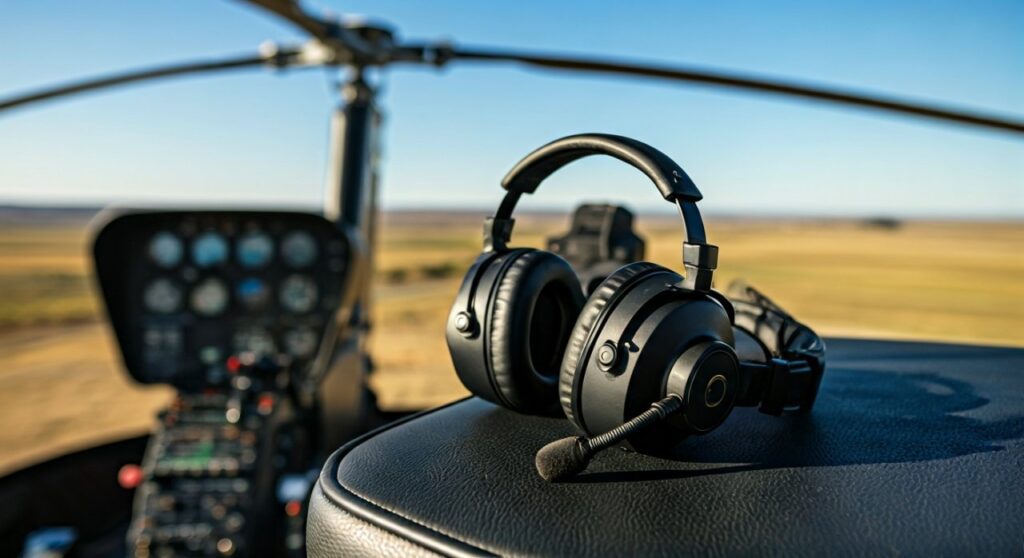
Helicopter cabins are significantly louder than commercial airplane cabins because the engine and transmission are located directly above the passengers. High-quality headsets use Active Noise Reduction (ANR) technology to cancel out low-frequency rumbles, allowing pilots and passengers to hear radio transmissions and each other without straining.
Key Takeaways: Helicopter Headsets at a Glance
If you are looking for a quick summary of why these devices are mandatory for flight safety, here are the essential facts:
- Hearing Safety: Helicopters generate noise between 100 dB and 110 dB; OSHA requires protection for anything over 85 dB.
- Communication: Headsets connect to an intercom system, allowing the pilot to talk to passengers and Air Traffic Control (ATC).
- Active Noise Cancellation (ANR): Modern headsets emit “anti-noise” waves to electronically silence the engine’s roar.
- Safety Protocols: Pilots must hear warning chimes and radio instructions that would otherwise be drowned out by the rotor blades.
- Comfort: Beyond noise, headsets provide a “cockpit” environment, reducing the fatigue caused by constant vibration and sound pressure.
Understanding the Extreme Noise Environment
To understand why do people wear headphones in helicopters, you first have to understand the sheer volume of a rotorcraft. Unlike a car or a commercial jet, a helicopter’s power plant and moving parts are just inches away from the cabin.
The Decibel Problem
A standard conversation happens at about 60 dB. A vacuum cleaner is roughly 75 dB. A helicopter at takeoff can hit 105 to 110 dB.
According to medical experts, exposure to 100 dB for more than 15 minutes can lead to permanent hearing loss. Since most helicopter tours or transport flights last at least 30 to 60 minutes, wearing professional-grade protection is a non-negotiable safety requirement.
Sound Frequency vs. Volume
It isn’t just the volume that is the problem; it is the low-frequency vibration. The “thump-thump” of the rotor blades creates a rhythmic pressure that can cause headaches and extreme fatigue. Aviation headsets are specifically tuned to filter out these specific frequencies while allowing the human voice to pass through clearly.
Communication: The Lifeline of the Cockpit
The most practical reason why do people wear headphones in helicopters is that you literally cannot hear the person sitting next to you without them.
The Intercom System (ICS)
Helicopter headsets are equipped with high-sensitivity microphones. When you speak, the Intercom System (ICS) amplifies your voice and sends it directly into the ear cups of everyone else on the aircraft. This allows for effortless conversation even while the turbine engine is screaming at full power.
Radio Transmission (ATC)
For the pilot, the headset is a critical tool for navigation. They must constantly monitor Air Traffic Control (ATC) frequencies. These transmissions are often filled with static or weak signals. A high-fidelity headset ensures the pilot doesn’t miss a single digit of a heading or an altitude instruction.
Voice-Activated Microphones (VOX)
Most professional headsets use VOX technology. This means the microphone is “off” until it detects a human voice. This prevents the constant roar of the wind and engine from being broadcast into everyone’s ears, creating a much quieter and more professional cabin environment.
Comparing Technology: ANR vs. PNR Headsets
Not all helicopter headphones are created equal. When experts discuss why do people wear headphones in helicopters, they usually distinguish between two types of technology.
| Feature | Passive Noise Reduction (PNR) | Active Noise Reduction (ANR) |
|---|---|---|
| How it Works | Uses thick foam and a tight seal to block sound physically. | Uses electronics to “cancel” sound waves. |
| Noise Reduction | Usually 20 dB – 24 dB. | Can exceed 30 dB – 40 dB total reduction. |
| Comfort | Often heavy and “tight” on the head (clamping force). | Generally lighter and more comfortable for long flights. |
| Price Point | Budget-friendly ($150 – $400). | Premium investment ($800 – $1,200+). |
| Power Source | None required. | Requires batteries or aircraft power (LEMO plug). |
Step-by-Step Guide: How to Properly Use a Helicopter Headset
If you are a first-time passenger or a student pilot, wearing these correctly is vital for your comfort and safety. Follow these steps to ensure you get the most out of the equipment.
Step 1: Check the Seal
The ear cups must fully surround your ears. If you wear glasses, ensure the frames are thin; thick frames can break the acoustic seal of the gel ear cushions, allowing noise to “leak” in.
Step 2: Position the Microphone
The microphone should be almost touching your lips—roughly 1/8th of an inch away. Aviation microphones are “noise-canceling,” meaning they only pick up sound from a very close distance. If it’s too far away, the intercom won’t activate when you speak.
Step 3: Adjust the Volume Individually
Most high-end headsets like the Bose A30 or David Clark H10-13.4 have individual volume sliders on the ear cups or the control module. Set your own comfort level without affecting the pilot’s volume.
Step 4: Toggle the ANR Switch
If the headset is an Active Noise Reduction model, make sure the power is turned on. You will feel a “pressure drop” sensation as the electronics engage and the engine roar suddenly turns into a faint hum.
Health Benefits: Beyond Simple Hearing Protection
Many people underestimate the physiological toll of helicopter noise. Professional pilots wear headsets for 8+ hours a day, and the benefits extend beyond just “hearing.”
- Reduction in Fatigue: Constant exposure to high-decibel noise causes the brain to work harder to process information. This leads to “auditory fatigue.”
- Prevention of Tinnitus: Without headsets, even a single helicopter flight can cause tinnitus (a permanent ringing in the ears).
- Lowering Stress Levels: Loud environments trigger a “fight or flight” response in the body. Headsets create a calm, controlled environment that allows the pilot to focus on flight maneuvers.
Leading Brands in the Aviation Industry
When looking into why do people wear headphones in helicopters, you will notice a few brands dominate the cockpits of the world.
- Bose: Known for the Bose A30, they are the gold standard for Active Noise Cancellation.
- David Clark: Famous for their iconic “green” headsets. They are incredibly durable and are the standard for military and utility pilots.
- Lightspeed: The Zulu 3 series is highly rated for comfort and features excellent Bluetooth integration for music and backup apps.
- Sennheiser: While they have exited the general aviation market, their older models remain highly prized for audio fidelity.
Expert Insight: Why the “U-174” Plug Matters
One technical detail often missed is the connection. Helicopter headsets typically use a single U-174/U plug. This is different from fixed-wing airplanes, which usually use a dual-plug system (PJ plugs).
The single-plug design is more durable and allows for a quick “breakaway” in case of an emergency egress. This is another reason why specialized headphones are used rather than consumer headphones like the Sony WH-1000XM5 or Apple AirPods Max, which simply cannot interface with the aircraft’s electrical system.
Common Questions About Helicopter Headsets (FAQs)
Can I use my noise-canceling music headphones in a helicopter?
No. Consumer headphones do not have the necessary impedance levels or the U-174 connection required to talk to the pilot or ATC. Furthermore, consumer ANR is designed for cabin drone, not the extreme 110 dB spikes found in a helicopter.
Do children need to wear headsets in helicopters?
Absolutely. Children’s ears are even more sensitive to pressure and noise than adults. Most tour operators provide specialized, smaller headsets for children to ensure their safety and comfort.
Why do some pilots wear helmets instead of just headsets?
In military or search-and-rescue (SAR) operations, pilots wear aviation helmets (like those from Gallet). These provide the same noise protection and communication features as a headset but also offer impact protection and mounts for Night Vision Goggles (NVGs).
What happens if the headset batteries die during a flight?
If you are using an ANR headset, it will revert to Passive Mode. You will still be able to hear and speak, but the engine noise will become much louder. This is why most pilots carry spare AA batteries or use aircraft-powered connections.
Is it hard to talk while wearing the headset?
Actually, it is much easier! Because the headset filters out the noise and uses a sensitive microphone, you can speak in a normal conversational volume, even if the helicopter is at full throttle.